Quelques-uns des principaux sujets de Géoforum

▲ Vente et achat de minéraux français et cristaux du monde sur Internet ▲ |

Vente et achat de minéraux sur Internet
Voir le nouveau contenu de Géoforum


elasmo
-
Compteur de contenus
16859 -
Inscription
-
Dernière visite
Type de contenu
Profils
Forums
Galerie
Blogs
Boutique
Tout ce qui a été posté par elasmo
-
identification dent du jurassique
elasmo a répondu à un sujet de fred39 dans Demandes d' identification de fossiles
Bonjour Nathalie Je me permet de te corriger car je ne comprenais pas ce que venais faire des ossicules (éléments d'astéries), la ce sont des denticules dermiques d'élasmobranches dont on parle. Pour compléter https://fr.wikipedia.org/wiki/Odontobase -
Debrief SMAM 2023
elasmo a répondu à un sujet de greg la veine dans Conférences, sorties, voyages, expositions,...
Déjà en 2004 il y avait un Australien qui s'était fait piquer deux pépites mais plus petites, la 500 grammes c'est un peu gros, ou possiblement une simple arnaque à l'assurance ? -
Fossiles de l'Auversien en France
elasmo a répondu à un sujet de elasmo dans Forum Fossiles et Paléontologie
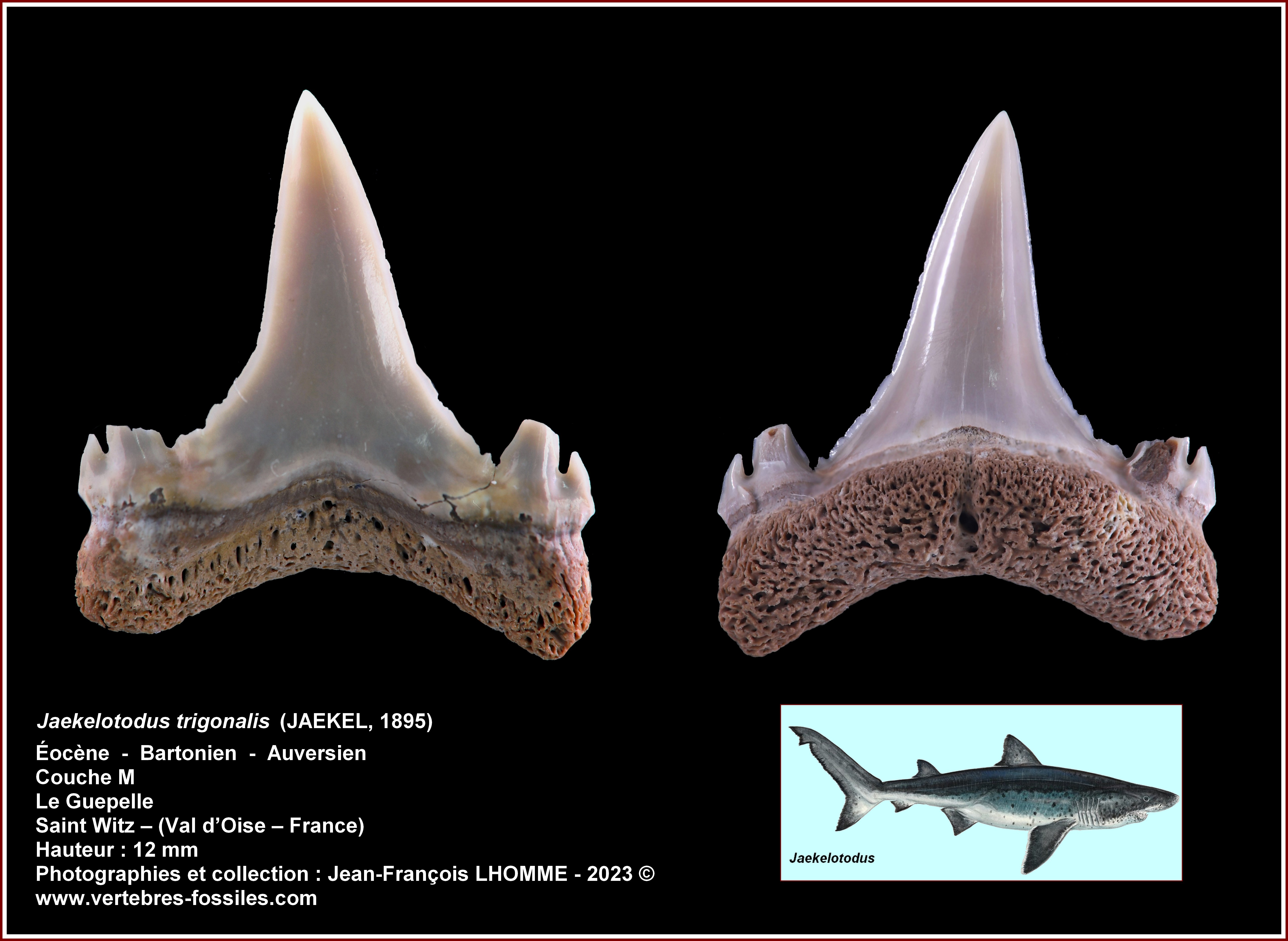
Bonsoir Petite dent retrouvée en faisant du rangement dans mes boites du Guepelle, découverte faite en 2002 sur le plateau central, Couche M (au dessus de l'agrégat coquiller)
-
Fossiles de l'Yprésien du bassin parisien (France)
elasmo a répondu à un sujet de elasmo dans Forum Fossiles et Paléontologie
Bonsoir Content de savoir que cela intéresse quelques personnes. A bientôt pour d'autres vidéos -
Microfaune du Sinémurien (pour ne pas encombrer le sujet de fred39)
elasmo a répondu à un sujet de geopas dans Demandes d' identification de fossiles
Bonsoir Effectivement le premier est une valve d'ostracode, les autres des foraminifères et pour finir des radioles d'échinodermes Il faut souvent trier un grand volume de sédiment avant de trouver des restes de vertébrés, sauf en de rares occasion (phosphates, bonebed, etc...) -
Demande identification petits mineraux
elasmo a répondu à un sujet de Fs2a dans Demandes d' identification de minéraux
Le plus simple est de demander au vendeur -
Fossiles de l'Yprésien du bassin parisien (France)
elasmo a répondu à un sujet de elasmo dans Forum Fossiles et Paléontologie
Un petit film monté ce jour, montrant la recherche de dents de requins dans le Vexin Durée : 9 minutes et 27 secondes Bon visionnage -
Vu comme cela, on pourrait aussi penser à de l'os, reste à le dégager pour voir si c'est tel est le cas ?
-
identification dent du jurassique
elasmo a répondu à un sujet de fred39 dans Demandes d' identification de fossiles
Content que cela plaise Je n'ai pas de Jurassique à trier, mais j'ai surtout des sédiments du Cénozoïque, je suis en train de compiler d'autres vidéos, qui seront postées au fur et à mesure. J'ai aussi un petit de Trias (sables du Rhétien) il faudra que je refasse une vidéo sur ce sujet. Dès que j'aurais des marnes à dissoudre j'en profiterais pour les traiter et les filmer. Sur ce bonne soirée à vous tous -
identification dent du jurassique
elasmo a répondu à un sujet de fred39 dans Demandes d' identification de fossiles
Bonjour Je viens de finaliser une petite vidéo de tri sous loupe binoculaire, d'un sédiment du Campanien inférieur, voir ci-dessous -
Ce n'est pas une ammonite, mais une Goniatites du Dévonien d'Erfoud, Maroc Il n'est qu'en partie vrai, seule la partie blanche (coquille) est fossile, le reste c'est de la roche polie pour lui donner un aspect plus grand que nature, une des méthodes pour attirer le chaland et berner les acheteurs trop crédules
-
Identification fossiles coquillages
elasmo a répondu à un sujet de Fs2a dans Demandes d' identification de fossiles
Bonsoir Sans provenance géographique, ni contexte géologique, difficile de se prononcer -
Bonjour Je ne comprends pas bien vos questions, quel est l'intérêt de nous partager des choses qui ne vous appartiennent pas ? est ce dans le but de les acquérir, si oui, nous ne sommes pas la pour donner des conseils, chacun est libre ou non d'acheter des choses, sans informations, sans provenances, etc...
-
identification dent du jurassique
elasmo a répondu à un sujet de fred39 dans Demandes d' identification de fossiles
Je l'espère, en attendant conserve bien celles ci -
identification dent du jurassique
elasmo a répondu à un sujet de fred39 dans Demandes d' identification de fossiles
Bonjour Ce sont des dents de requins, lesquelles c'est ce qui sera le plus compliqué à dire précisément -
Dent des phosphates de Tunisie - Ginglymostoma ?
elasmo a répondu à un sujet de geopas dans Demandes d' identification de fossiles
Moi non plus, je pense qu'il y a confusion ou que le nom est incorrect -
Fossiles de l'Auversien en France
elasmo a répondu à un sujet de elasmo dans Forum Fossiles et Paléontologie
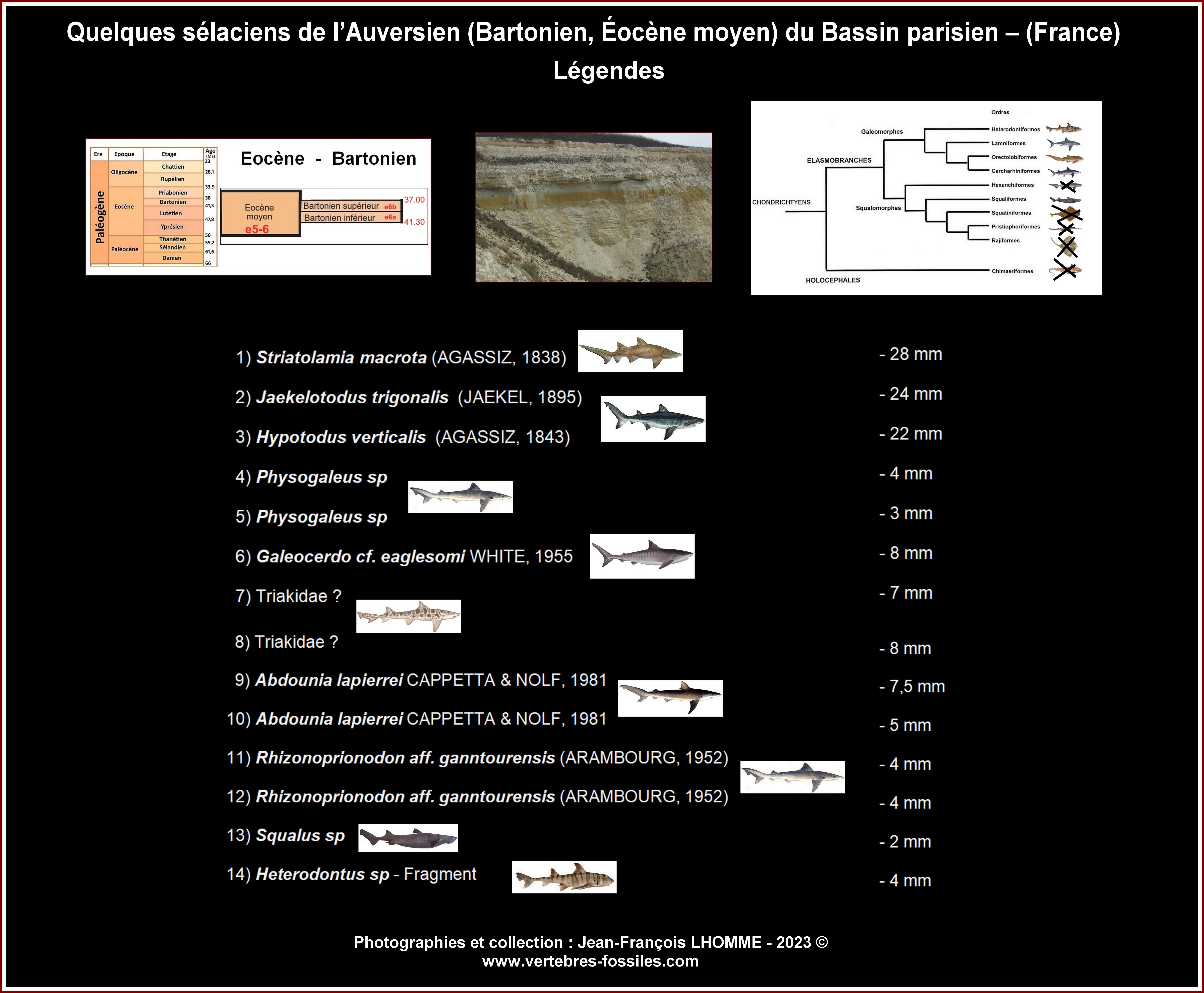
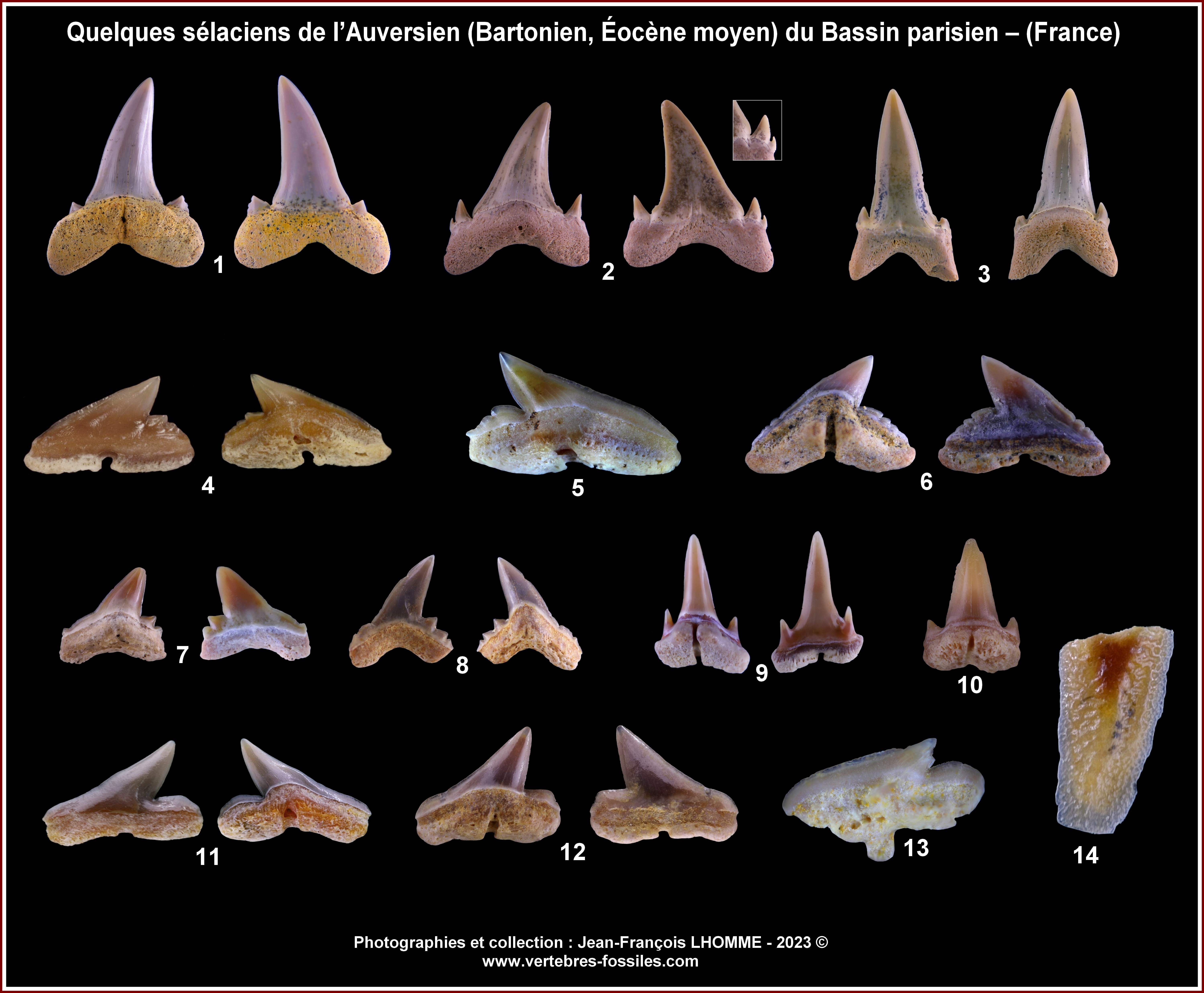
Bonjour J'ai enfin réussi à compiler une première planche photographiques de mes échantillons de dents Auversienne du Bassin parisien, il manque encore les Rajiformes, mais cela viendra ultérieurement. Je suis tout à fait conscient qu'il manque encore un certains nombre de taxons, mais c'est un bon début. Planche modifiée le 22 juin 2023
-
Dent des phosphates de Tunisie - Ginglymostoma ?
elasmo a répondu à un sujet de geopas dans Demandes d' identification de fossiles
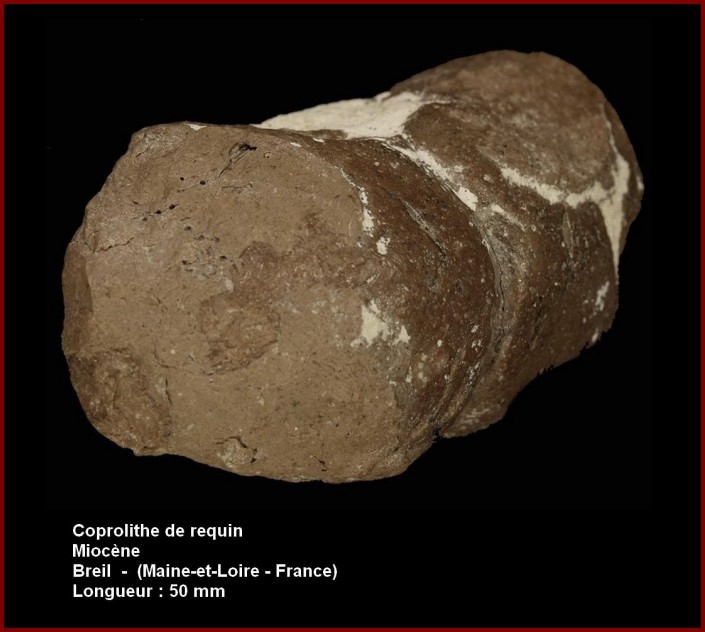
Bonjour C'est beaucoup trop régulier pour être un coprolithe de requin, il s'agit plus vraisemblablement d'un moule interne d'un gastéropode, trou au milieu constituant une sorte d'axe central, voir Pacaud et Lebrun, 2020 sur les invertébrés marins des phosphates du Maroc https://www.researchgate.net/publication/342493003_Les_phosphates_du_Maroc_haut-lieu_des_fossiles_du_Maastrichtien-Eocene_Les_faunes_d'Invertebres_-_Moroccan_phosphate_beds_hot-spot_for_Maastrichtian-Eocene_fossils_The_Invertebrate_fauna_Edition_du_Pi Pour comparer un coprolithe de requin des faluns d'Anjou (Miocène)
-
Lamellibranche de l'hettangien (Gard)
elasmo a répondu à un sujet de dominique06 dans Demandes d' identification de fossiles
Bonjour Sur Gallica tu pourra voir un scan de l'ouvrage de D'orbigny https://gallica.bnf.fr/ark:/12148/bpt6k973052/f7.item Voici également une brève liste de publications sur l'étage Hettangien, reste à trouver ces publications MAUBEUGE Pierre, 1974, Brèves remarques stratigraphiques sur l'Hettangien dans l'Est du Bassin de Paris . Publ. Institut. G. Ducal Luxembourg, Sect. Sc., 1 pl. Colloque du Jurassique, Luxembourg 1967, et mémoires BRGM coté 1971, imprimé 1974, p. 501-504. MAUBEUGE Pierre, 1969, Catalogue des Ammonites du Jurassique inférieur et moyen (Hettangien à Bathonien) du Musée Cantonal de Bâle Campagne. Complément aux parties 1 et 2. Tätigkeitsberichte Naturf. Gesellschaft Baselland, Bd. 26, 1966-1967, p. 65-79. MAUBEUGE Pierre, 1960, Catalogue des Ammonites du Jurassique inférieur et moyen (Hettangien à Bathonien) du Musée Cantonal de Bâle Campagne. Tätigkeitsberichte der Naturforschenden Gesellschaft Baselland, Band 22, 1958-60, p.27-164, 81 fig., 1 carte, 1 tabl. stratig. de H. Schmassmann. MAUBEUGE Pierre, 1967, Catalogue des Ammonites du Jurassique inférieur et moyen (Hettangien à Bathonien) du Musée Cantonal de Bâle Campagne. Tätigkeitsberichte der Naturforschenden Gesellschaft Baselland. 3è partie. Ammonites du Jurassique étranger. Bd. 26, 1966-67. p.13-64. DEMATHIEU G. et SCIAU J., 1992, Des pistes de Dinosaures et de Crocodiliens dans les dolomies de l’Hettangien du Causse du Larzac. C.R Acad. Sci. Paris. T.315, série II, page 1561-1566, 1992. Note présentée par Yves COPPENS et m’a été envoyée par l’un des auteurs. MERGEN, P., 1993, Données nouvelles et mise au point sur la limite Hettangien-Sinémurien à Metzert (Arlon). Bull. Soc. Belge Géologie, 92 (1), pp. 55-60. GERARD, C. & G. GARDET, 1939, L'Hettangien et le Sinémurien inférieur et moyen de Meurthe-et-Moselle. Bull. Soc. Géol. France, 5e série, VIII (7-8), pp. 529-581. MAUBEUGE Pierre, 1969, Le problème de la terre vindélicienne à la faveur d'observations sur l'Hettangien dans le Jura Suisse septentrional. Bull. Acad. & Soc.Lor.Sc., T. VIII, n° 1, p.30-46. MAUBEUGE Pierre, 1964, Quelques remarques à propos de l'Hettangien, du Sinémurien et du Lotharingien. Colloque du Jurassique, p. 127-133. MAUBEUGE Pierre, 1960, Quelques remarques sur l'Hettangien en Lorraine. Ibid. p. 186-195. MAUBEUGE Pierre, 1959, Quelques remarques sur la limite de l'Hettangien et du Sinémurien dans la zone de faciès "Grès de Luxembourg". Bull. Soc. Belge Géol. Pal.& Hydr., 17 novembre 1959, T. LXVIII, p.422-429. MAUBEUGE, P.L., 1959b, Quelques remarques sur la limite de l'Hettangien et du Sinémurien dans la zone du faciès "Grès de Luxembourg". Bull. Soc. belge Géol., Pal., Hydrol., 68 , pp. 422-429. MATTEI J., 1958, Sur la découverte d'une faune exceptionnelle dans l'Hettangien dolomitique de Clermont-l'Hérault (Languedoc), compte rendu Sommaire des séances, S.G.F., n° 1/2, p. 231-233. MAUBEUGE Pierre, 1965, Un contact Rhétien-Hettangien dans le Grand-Duché de Luxembourg. Bull. Acad. & Soc. Lor. Sc., T. V, n° 3, p.123-127. MAUBEUGE Pierre, 1966, Un Pagiophyllum remarquable de 1'Hettangien du Grand-Duché de Luxembourg. Inst. Grand-Ducal, Sect. Sc., Archives (1964-65), T. XXXI, p.299-303. -
Lamellibranche de l'hettangien (Gard)
elasmo a répondu à un sujet de dominique06 dans Demandes d' identification de fossiles
Bonjour Je ne sais plus si tu avait récupéré le d'Orbigny sur mon serveur FTP, si ce n'est pas le cas, il suffit de cliquer sur le lien. Tout ce que j'ai est joint dans l'archive, si il manque des éléments c'est que je ne les ai pas en ma possession http://hybodus.free.fr/pdf/orbigny/ -
Lamellibranche de l'hettangien (Gard)
elasmo a répondu à un sujet de dominique06 dans Demandes d' identification de fossiles
Bonjour Les premières photos du post, montrent des bivalves qui me semblent être des moules internes de Cucullaea , ou tout au moins de la famille des Cucullaeidae -
Bonjour Les fulgurites que j'ai pu voir au Maroc, et ailleurs sont toutes creuses, et très légères, si c'est concrétions sont pleines, il ne peux s'agir de fulgurites, qui ont d'ailleurs un aspect très différents, sous forme de tube creux. Je pense qu'il faut chercher l'origine de ces objets du coté d'un contexte sédimentaire, puis altéré par les sables du désert ?
-
Nombreux et divers éléments, Valanginien drômois
elasmo a répondu à un sujet de Onverracaplustard dans Demandes d' identification de fossiles
Bonsoir De bien beaux aptychus (peux être des Laeveptychus ?) Un lien qui pourrait vous être utile http://www.cephalopodes-cretaces.com/liens/ -
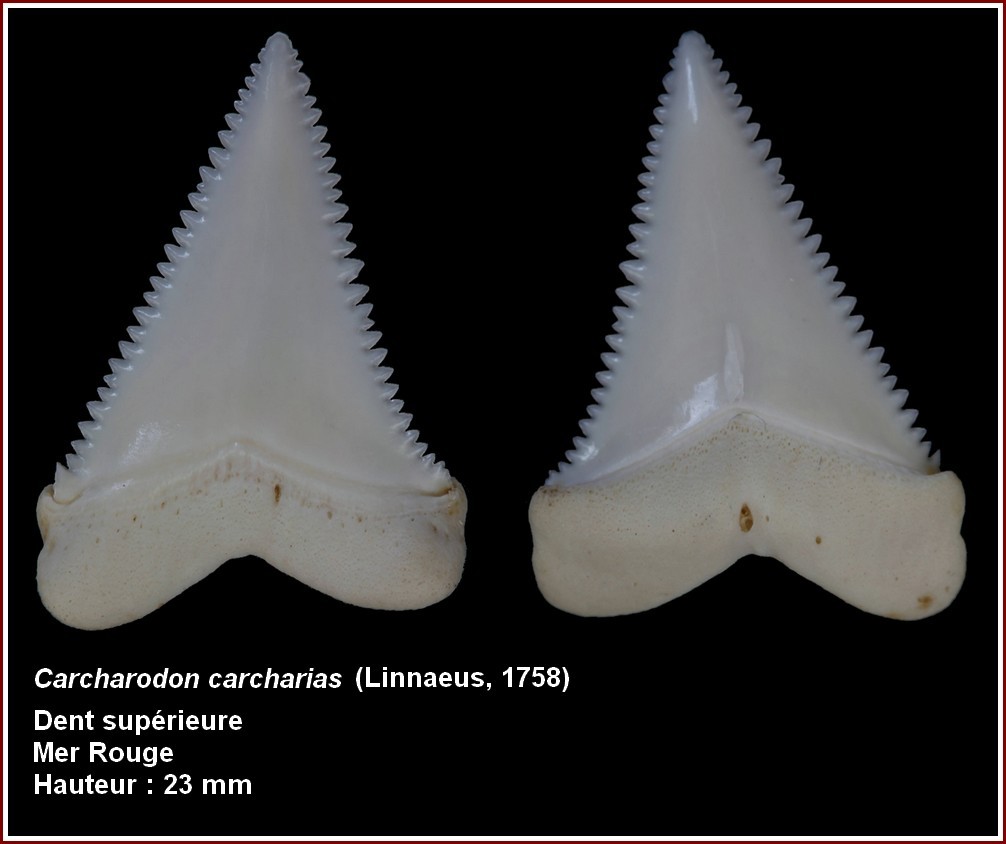
et bien si on se contre fiche que les gogos qui achètent ce genre de cochonneries se fassent avoir, rappelle toi que le forum n'est pas un lieu ou l'on parle du prix des achats, si ce membre l'as acquis même à un prix indécent, ce n'est pas notre problème, on voit bien que c'est du bidouillage à deux balles Voici une vrai dent pour comparer
-
Fossiles du lutétien du bassin parisien
elasmo a répondu à un sujet de elasmo dans Forum Fossiles et Paléontologie
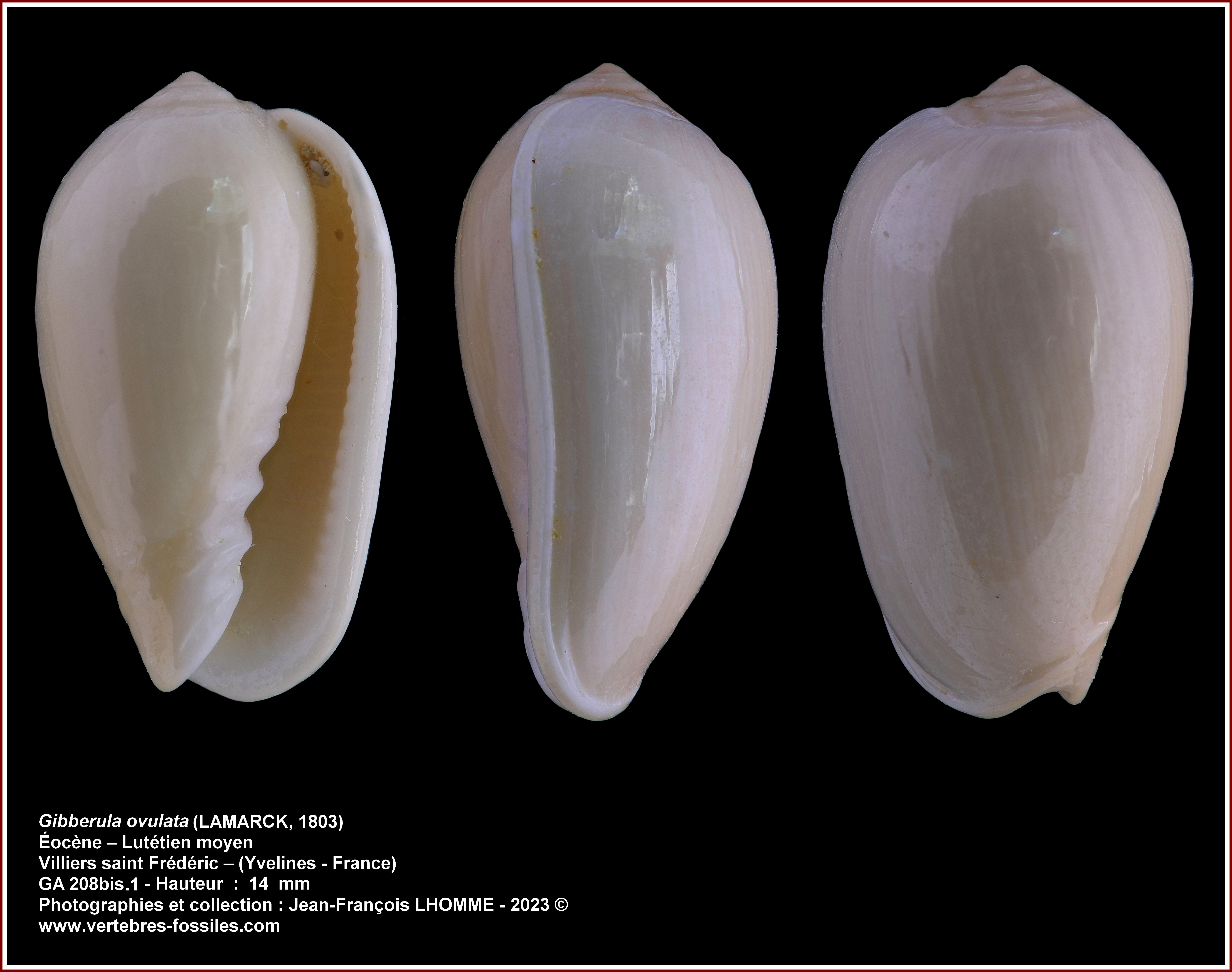
Bonsoir Une autre Gibberula nacrée, de grande taille, la qualité de ces coquilles me fascine toujours autant Ce spécimen est issu d'un don, car moi même je n'ai jamais fouillé à Villiers saint Frédéric.