Quelques-uns des principaux sujets de Géoforum

▲ Bourse minéraux et fossiles à PARIS ▲ |


jjnom
-
Compteur de contenus
3107 -
Inscription
-
Dernière visite


.thumb.jpg.879a8fbfb3c8c83ded46439156d90244.jpg)


jjnom's Achievements






-
Carbonifère de Pour - Belgique - énigme ?
jjnom a répondu à un sujet de drongen dans Demandes d' identification de fossiles
Bonsoir. Pas les caractéristiques d'un strobile. Et pas Lepidodendropsis qui est cantonné dans le Carbonifère inférieur. A Dour, il n'y a que du Carbonifère sup (ex Westphalien). Voir ceci:https://forums-naturalistes.forums-actifs.com/t4396-lepidophloios-sterzel-1907 -
En Côtes d'Armor entre LeGuildo et Fréhel
jjnom a répondu à un sujet de jjnom dans Roche et pétrographie
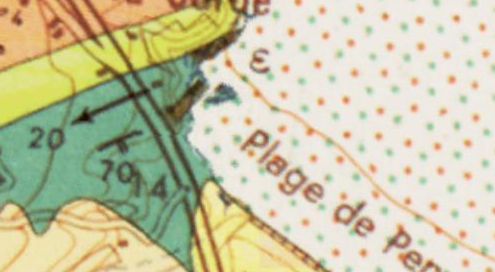
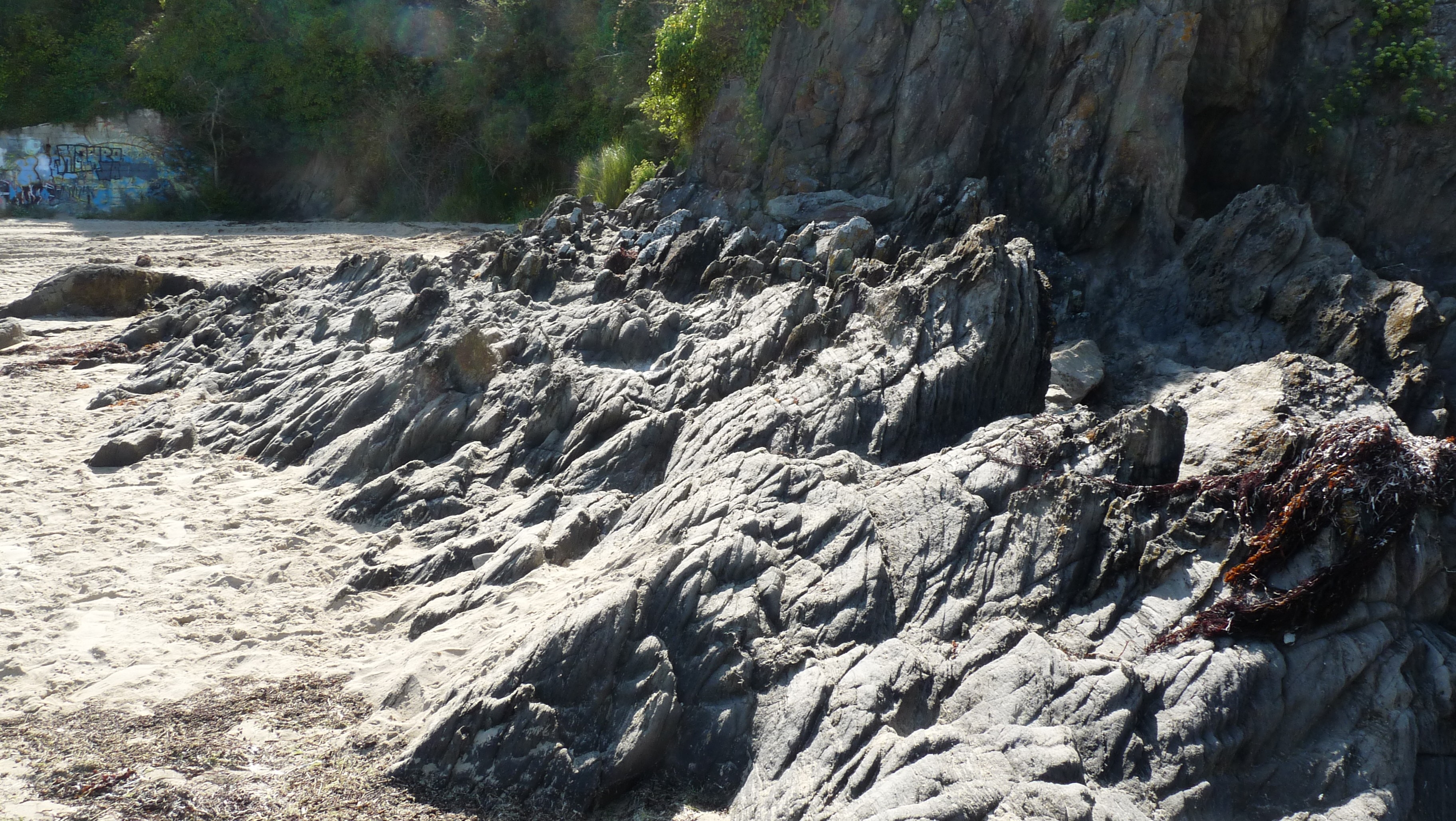
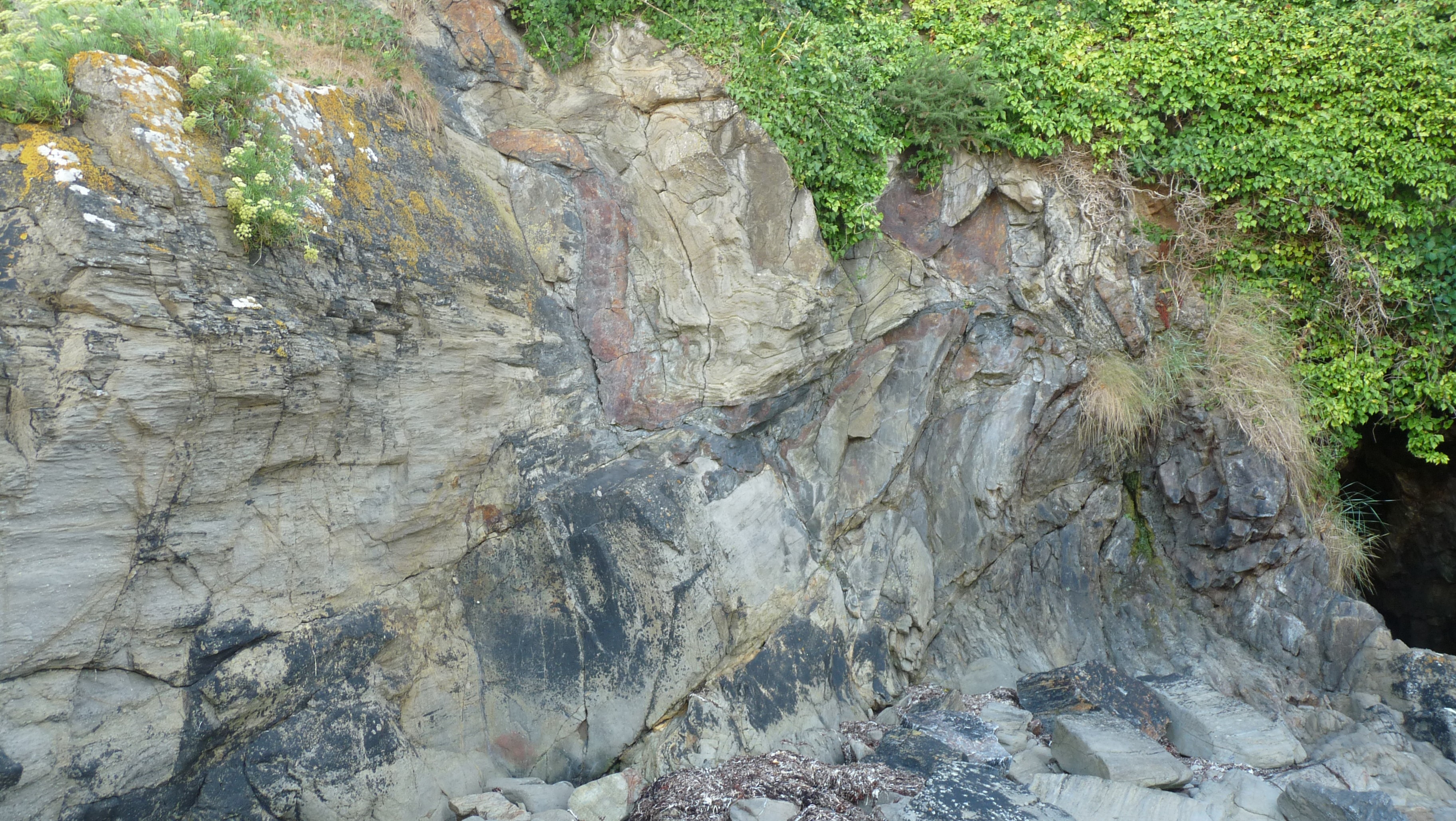
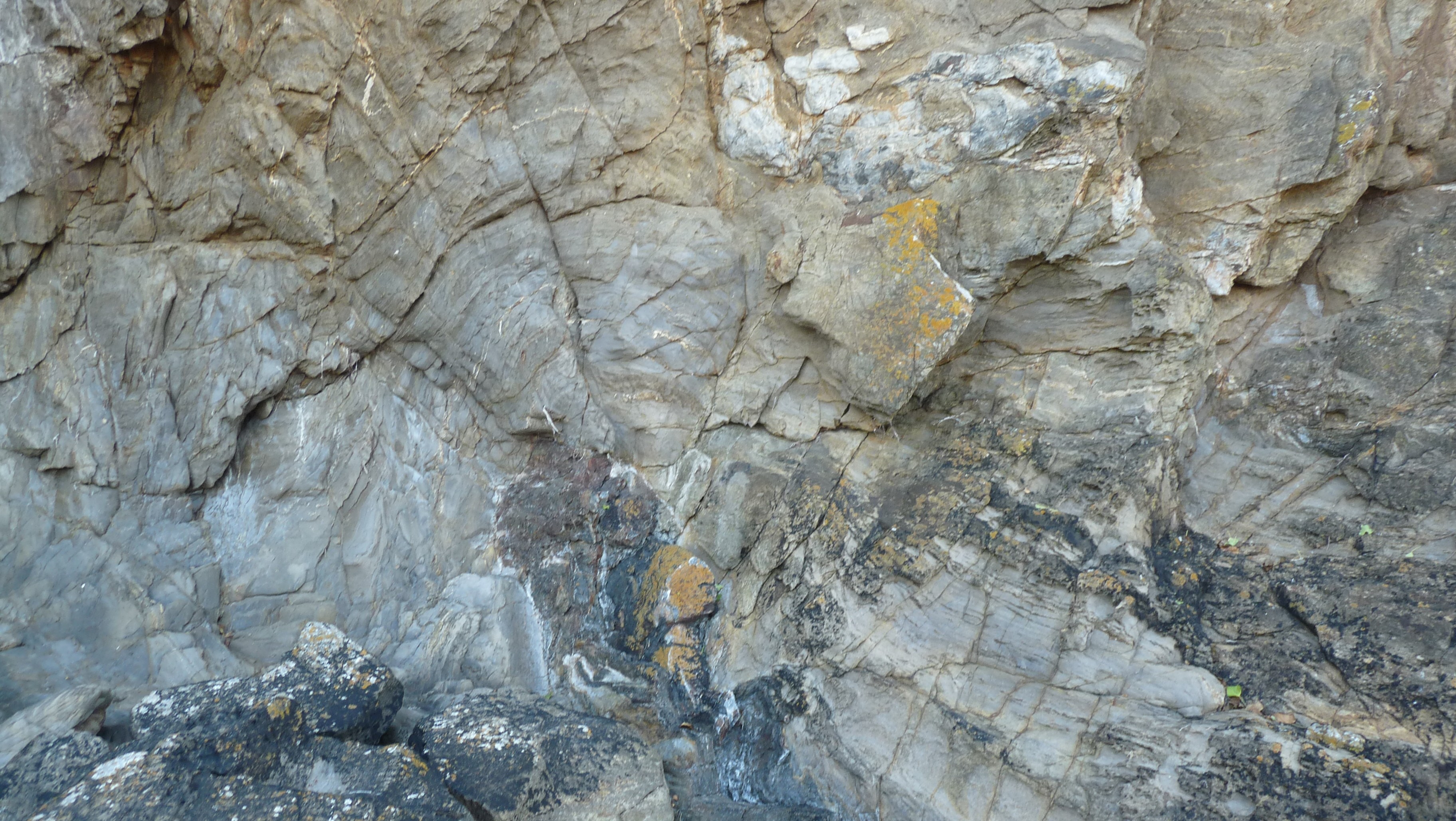
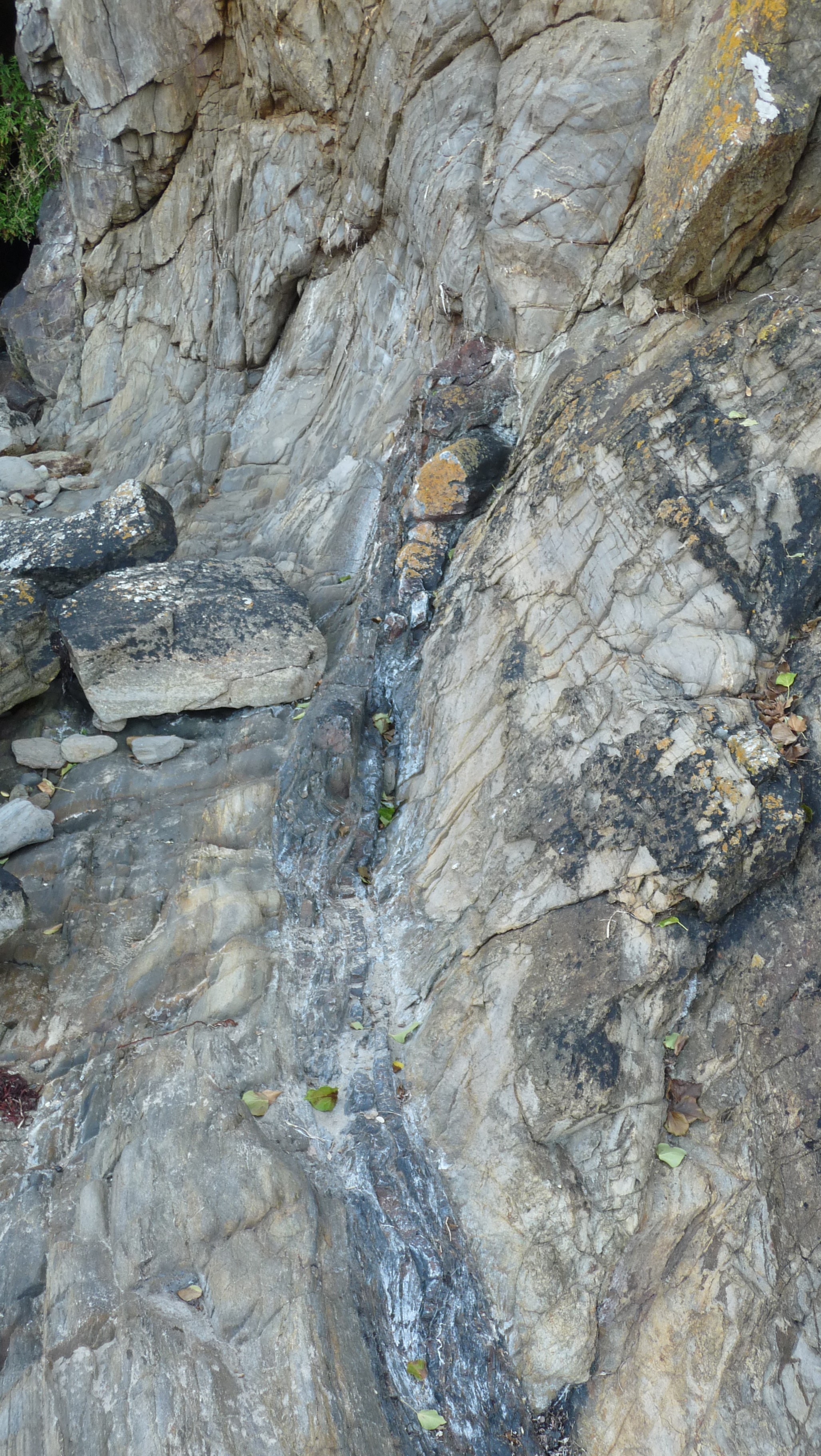
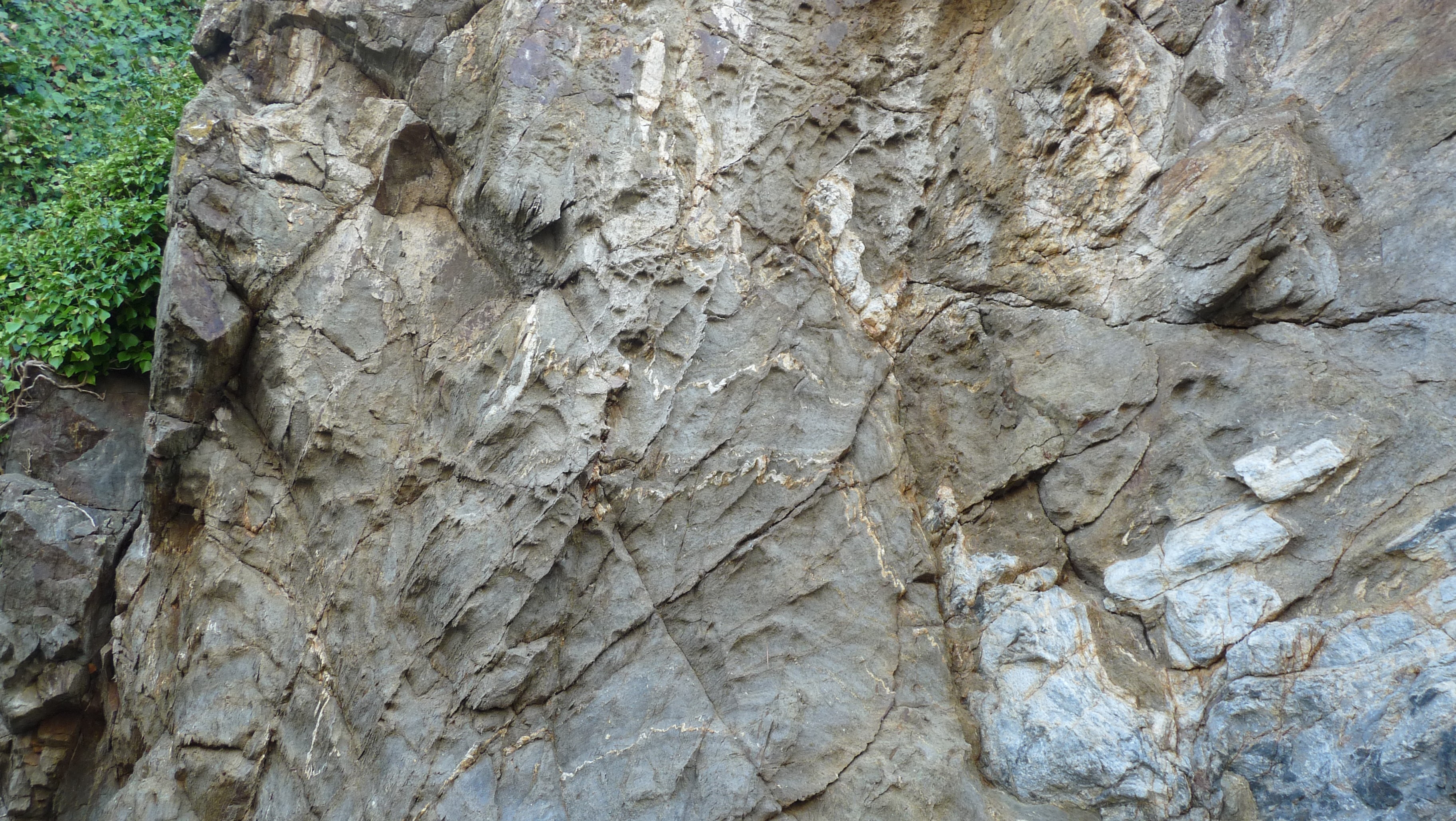
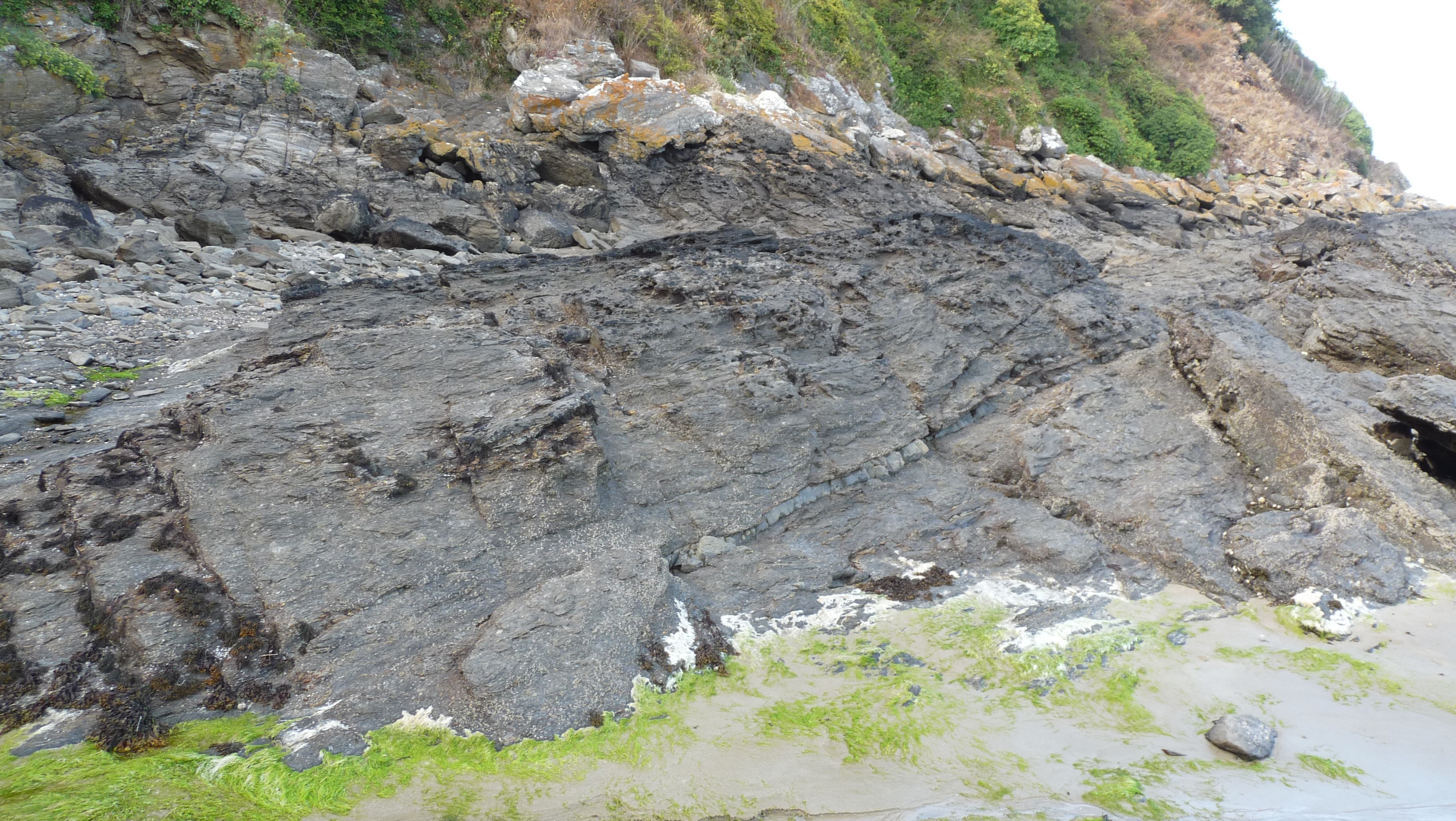
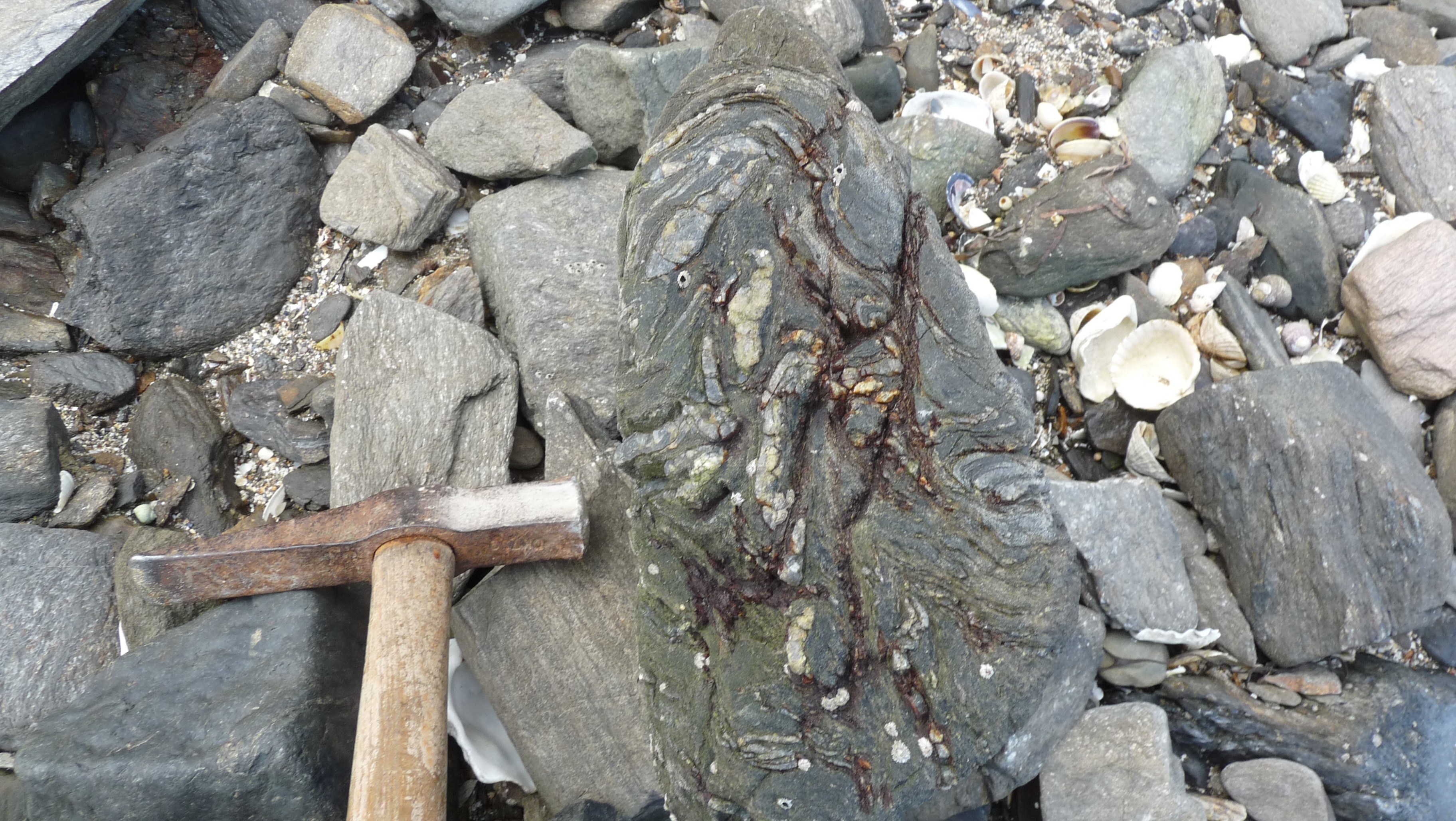
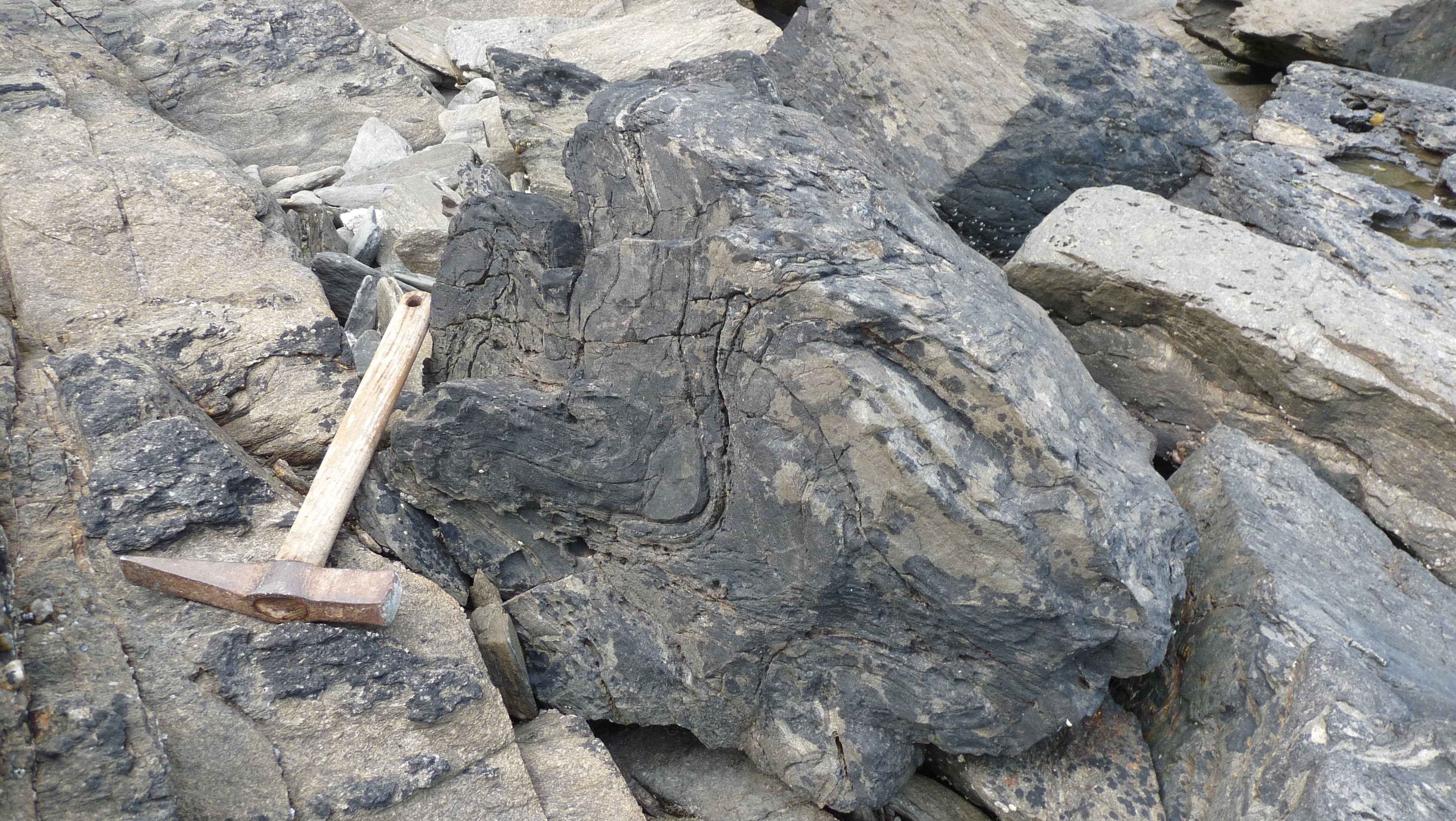
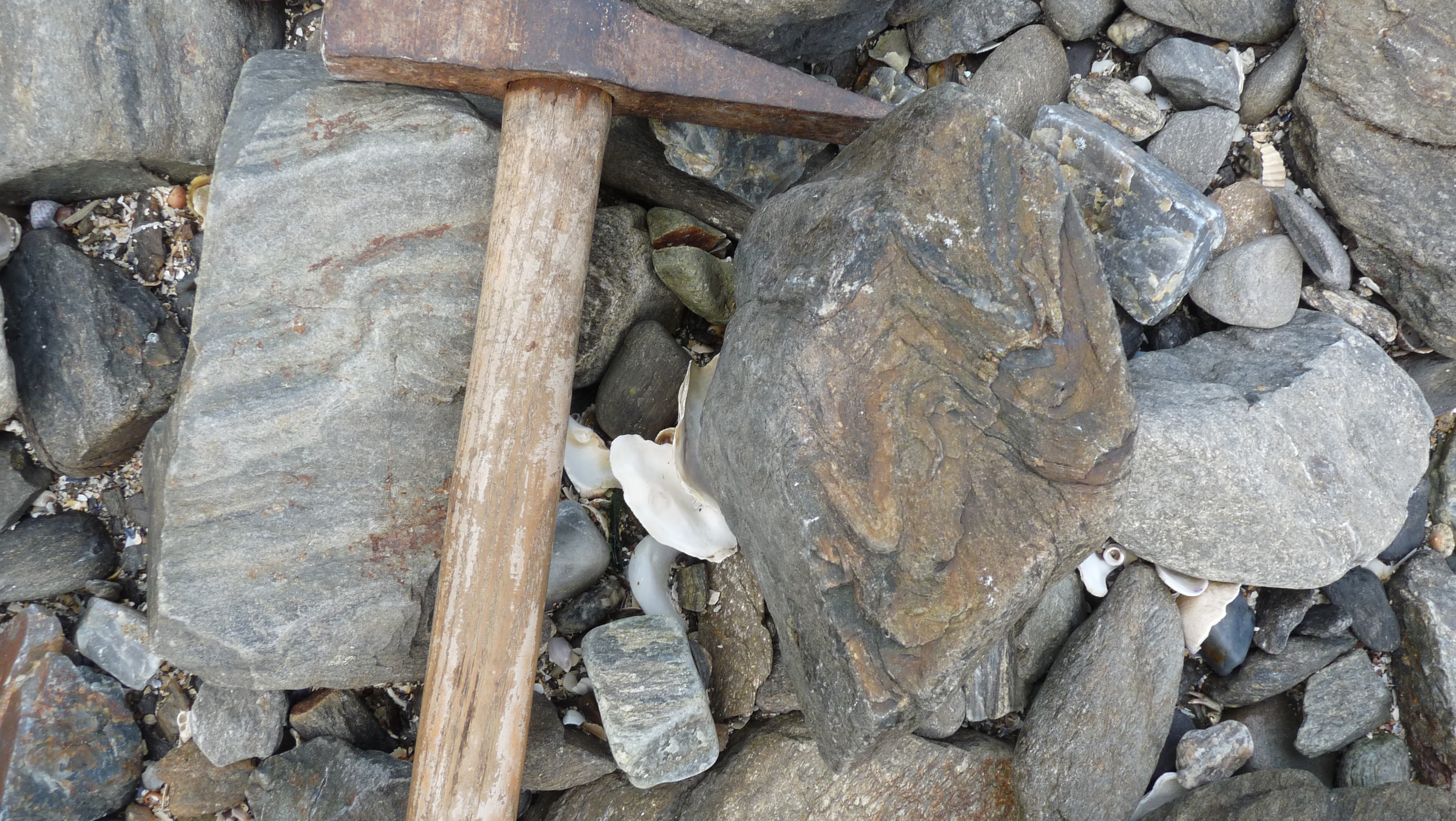
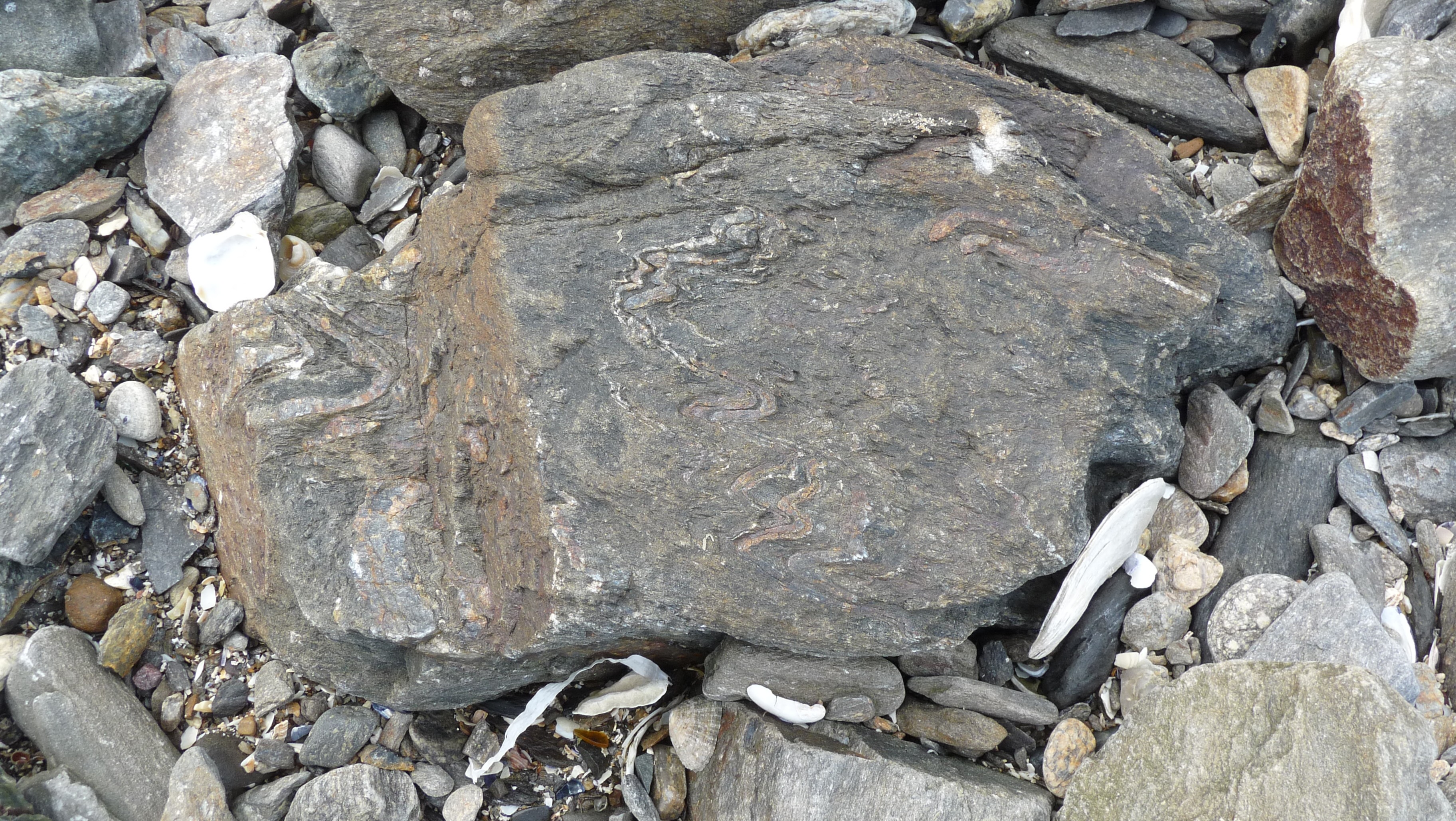
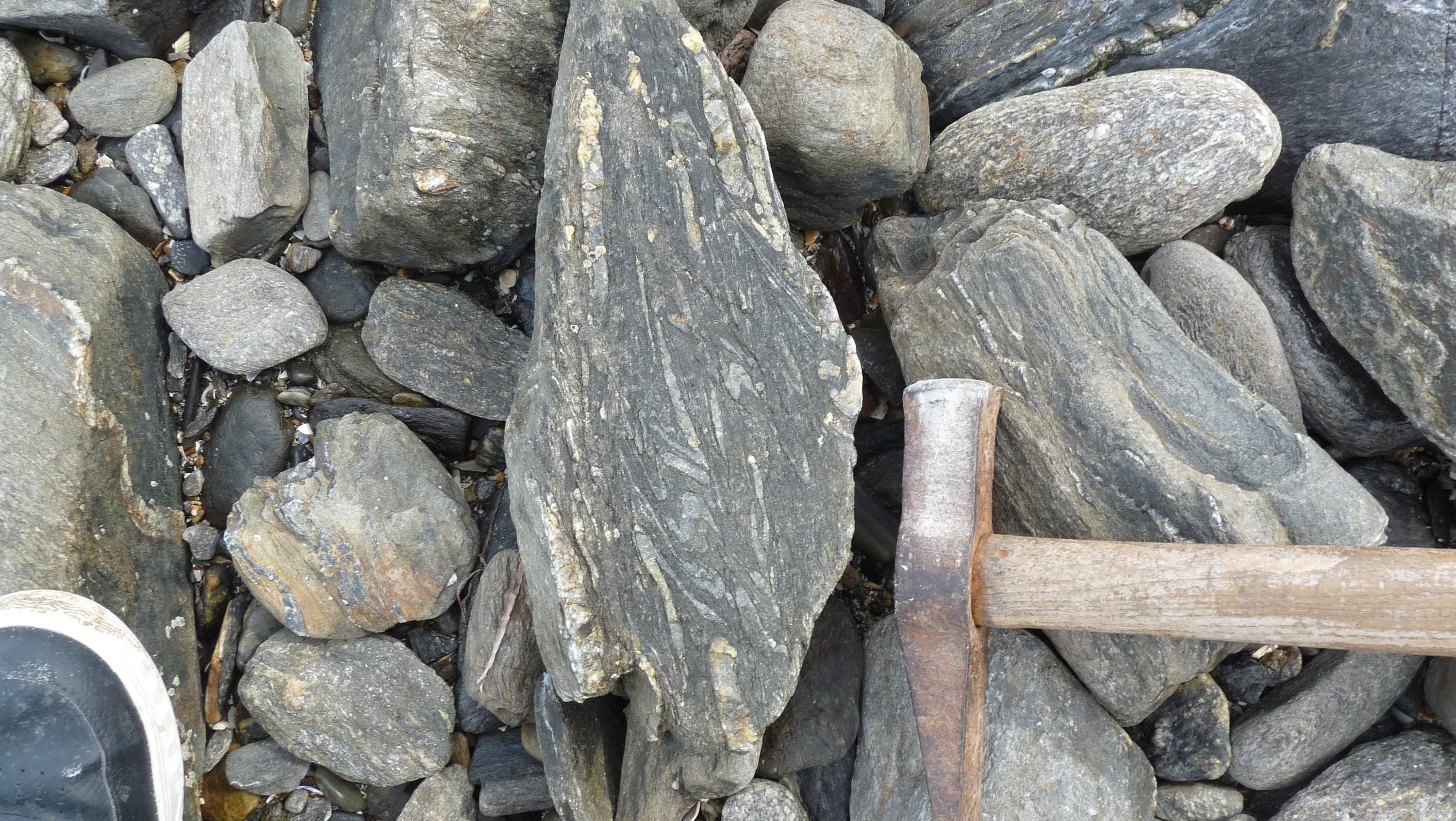
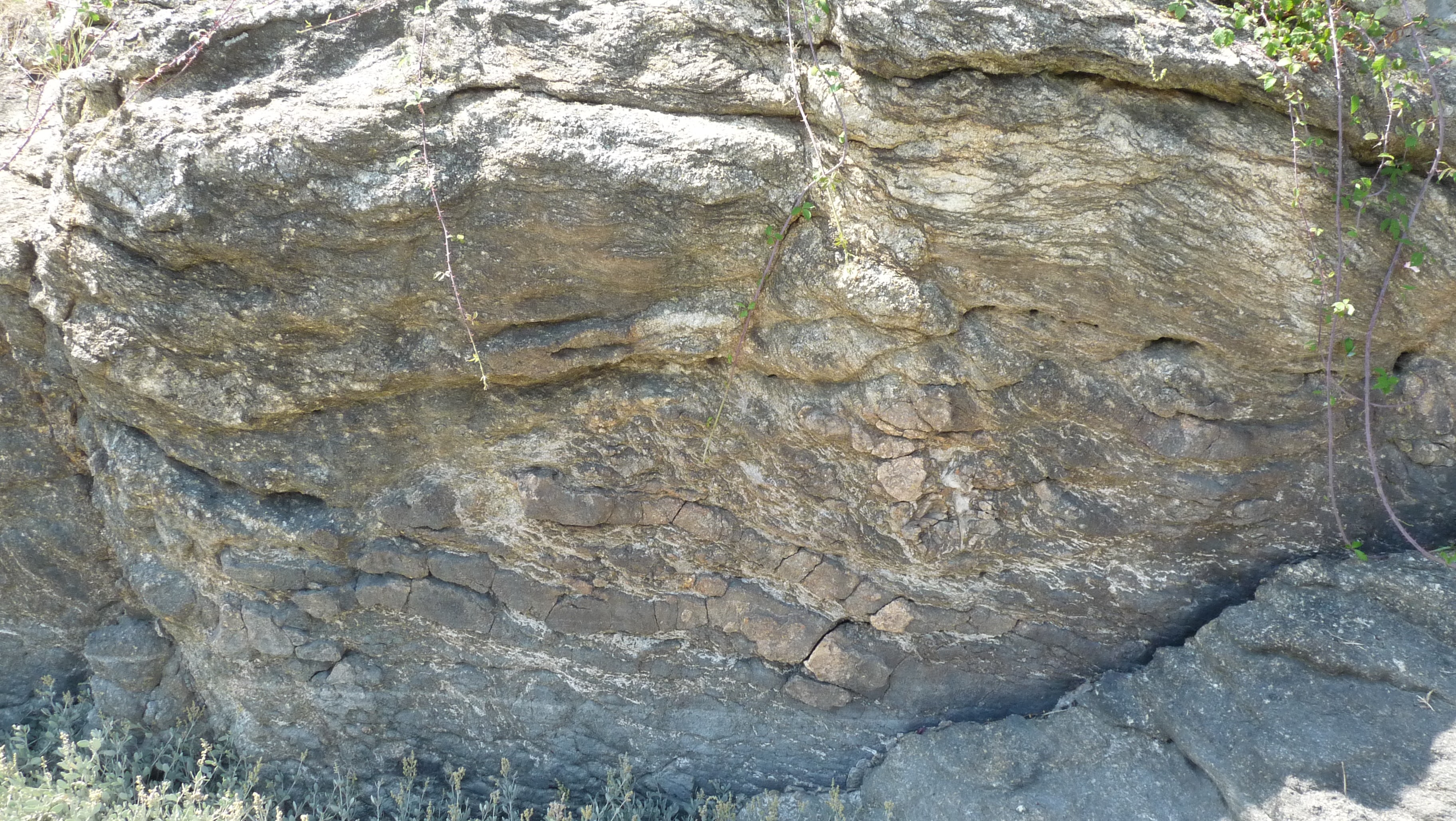
Suite avec l'extrémité Nord de la plage de Pen Guen à Saint Cast. Le contexte: micaschiste et filons de dolérite. Extrait de la carte géologique: Les micaschistes riches en mica blanc sont bien visibles et l'érosion différentielle met bien en relief les lits avec quartz. On a l'impression d'une formation monotone, monoclinale mais on peut y voir des plis qui ne semblent pas ceux qu'on trouverait dans un domaine où ils sont censés être isoclinaux. Voir ci-dessous au centre, sous la végétation Ou encore ci-dessous où un pli semble être venu se mouler sur le niveau noir qui est un niveau de phtanite. A se demander si on est encore dans les micaschistes. Pourtant, sur la même paroi, juste au dessus, on trouve des filets blancs avec microplis isoclinaux. 2 phases tectoniques? Une qui génère la schistosité puis une seconde avec des plis bien plus larges? Une bande de phtanites qui ne m'a pas semblée être continue: Les phtanites sont des microquartzites chargées en graphite Au fond de la crique: au premier plan les micaschistes, au second plan, en pied de falaise, la dolérite. Dans l'espace entre les deux se trouve un poulier où la mer a entassé blocs et galets où on trouve une multitude de microplis isoclinaux. Ce dernier donne bien l'idée de l'intensité des déformations: Quant à la dolérite, elle est ici plutôt grise et aphanitique (pas de cristaux visibles à l'oeil nu) A suivre...
-
En Côtes d'Armor entre LeGuildo et Fréhel
jjnom a répondu à un sujet de jjnom dans Roche et pétrographie
Bonjour. J'aurai volontiers parié sur la perméabilité en grand. J'imagine qu'elle est nettement supérieure dans un filon souvent bien fracturé et qu'en conséquence l'action de l'eau (et le pH, et le CO2) est facilitée. En outre les plagios calciques sont plus facilement altérables que les plagios sodiques. -
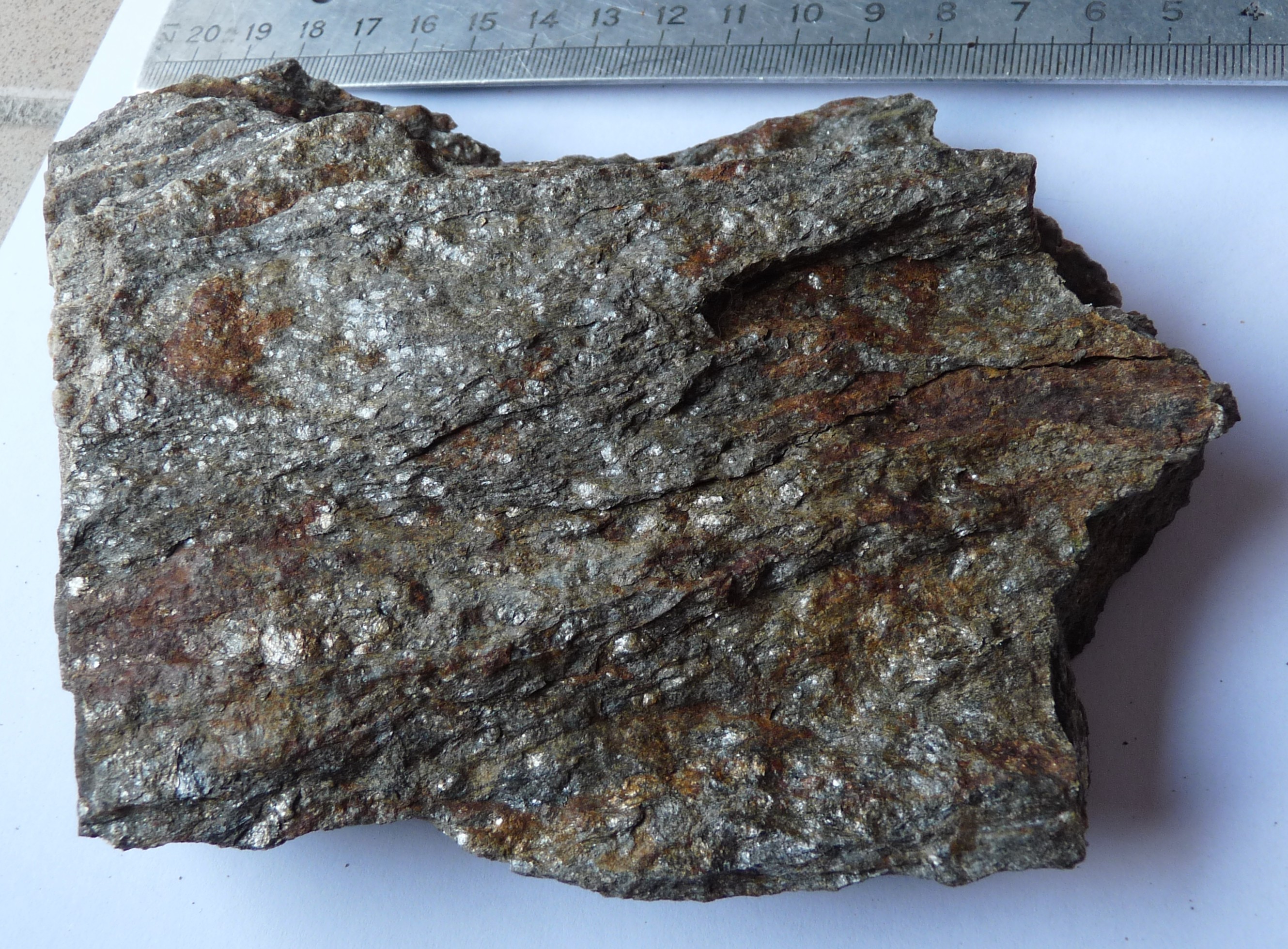
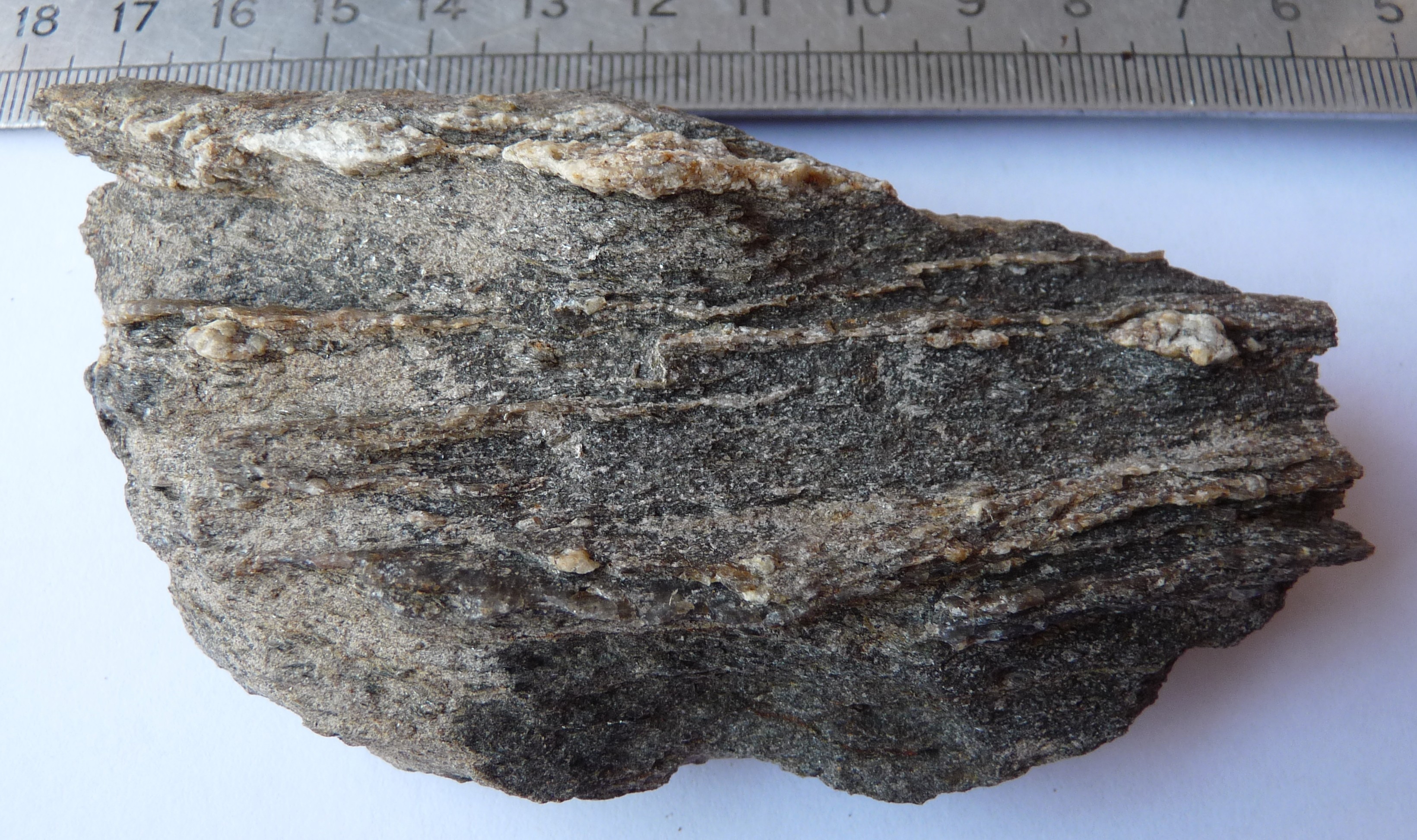
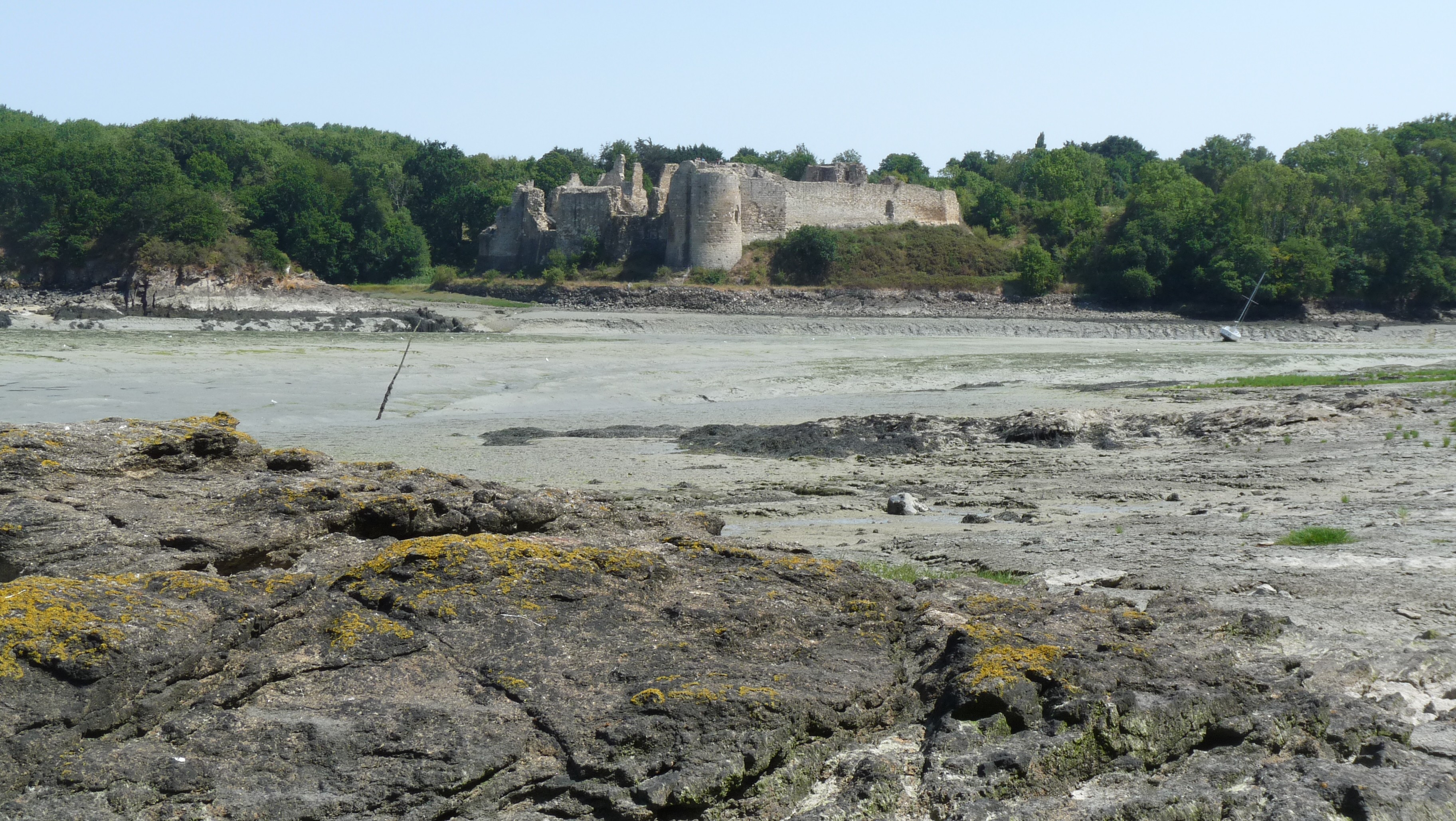
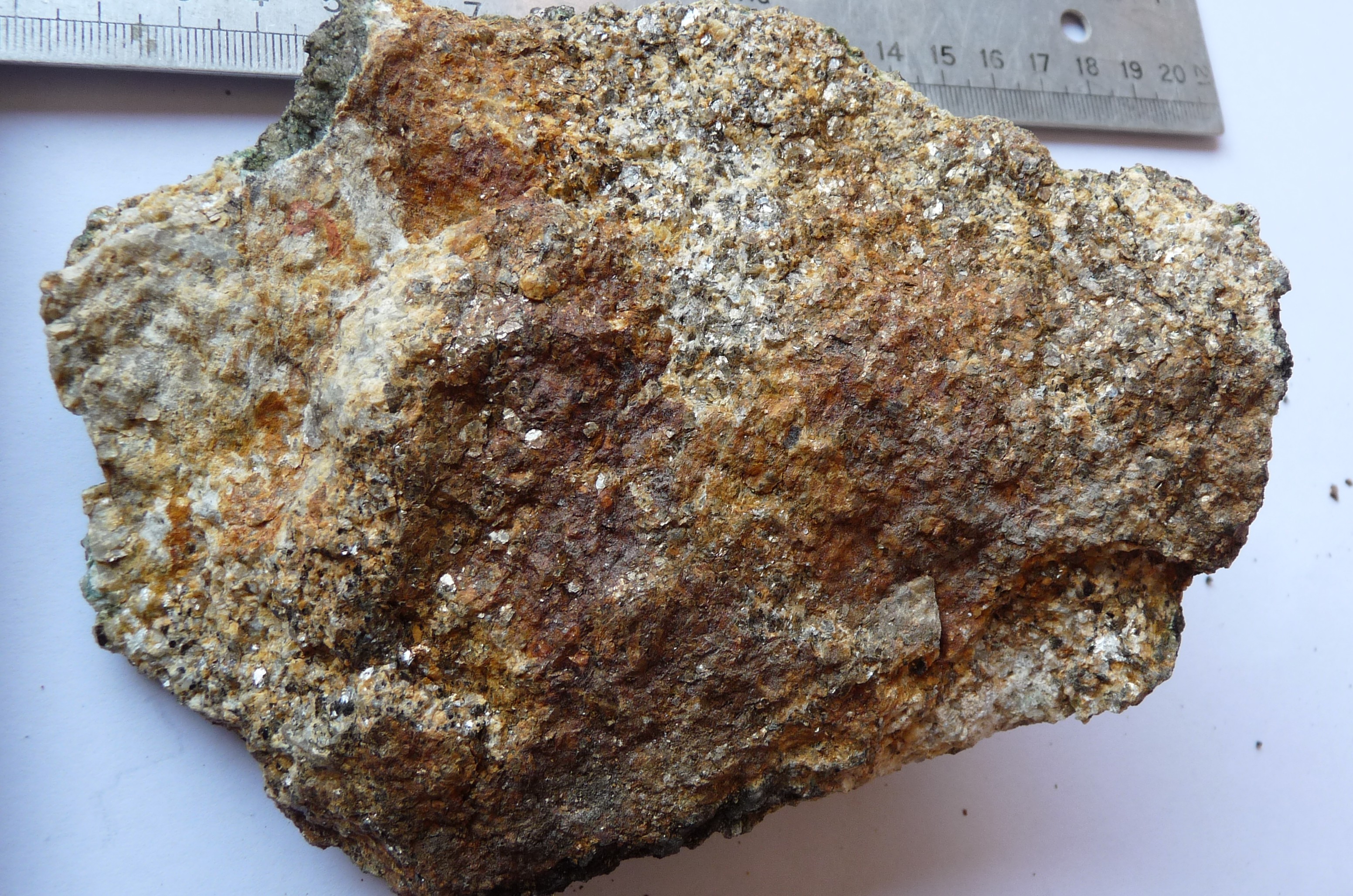
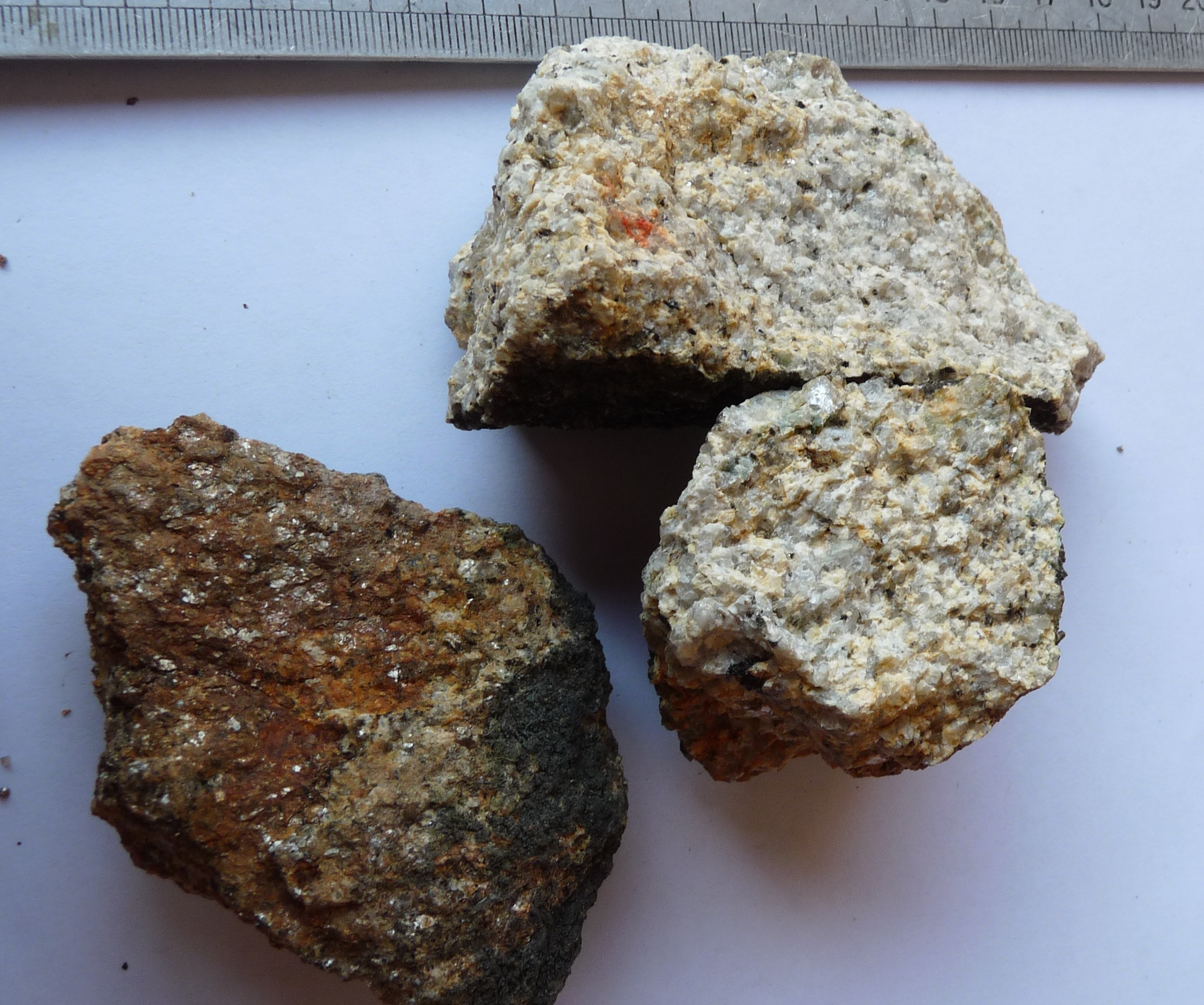
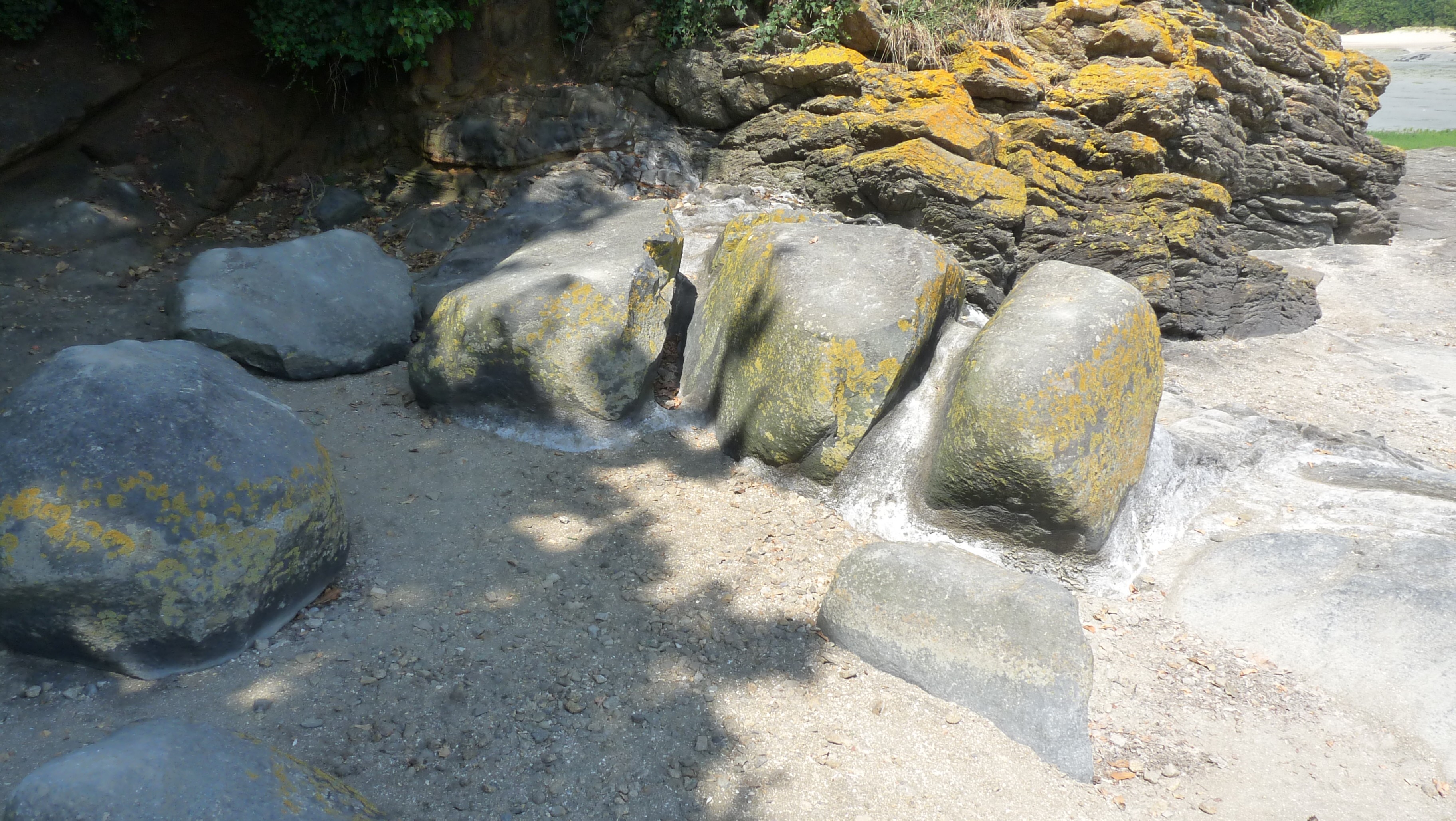
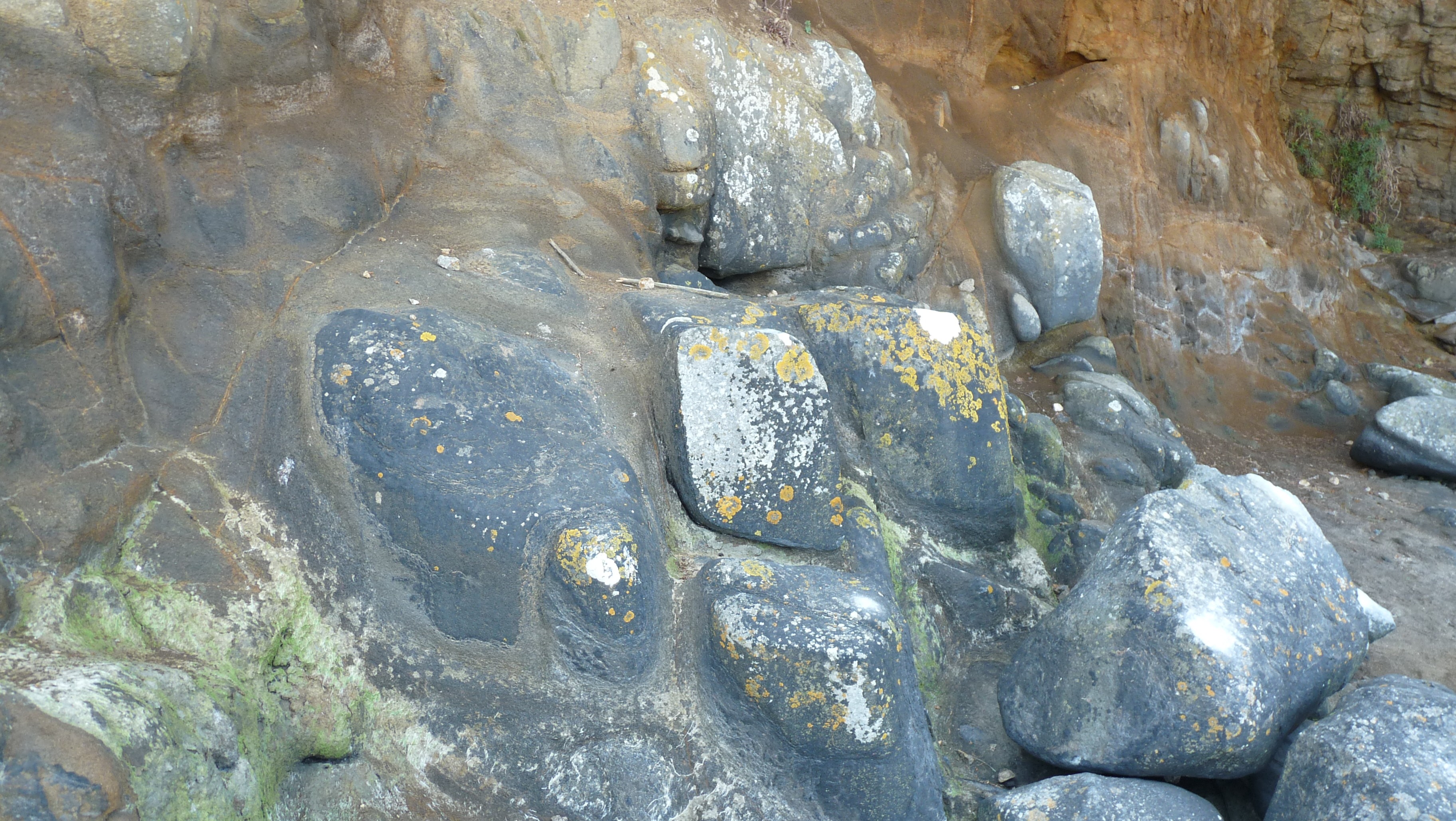
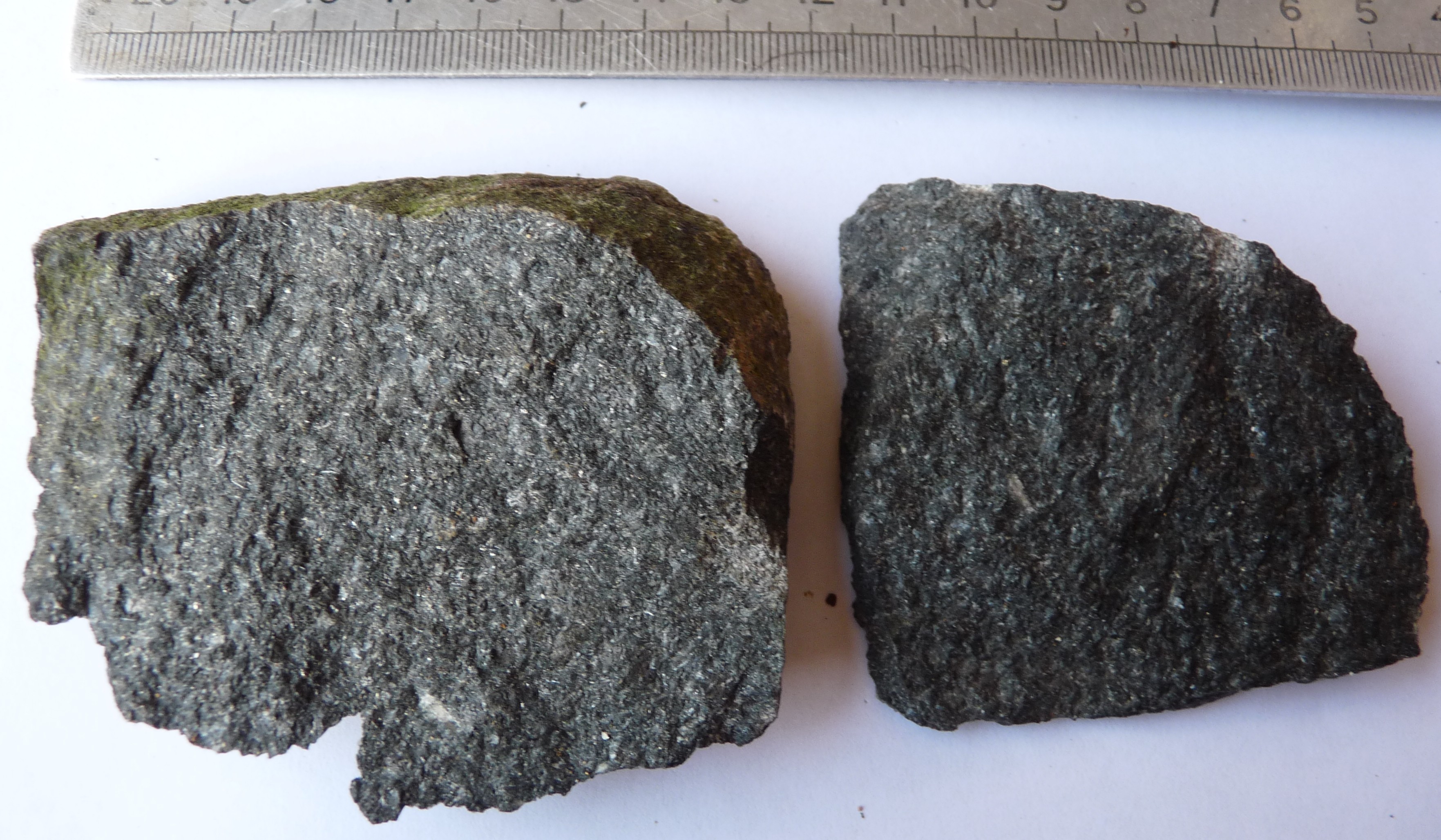
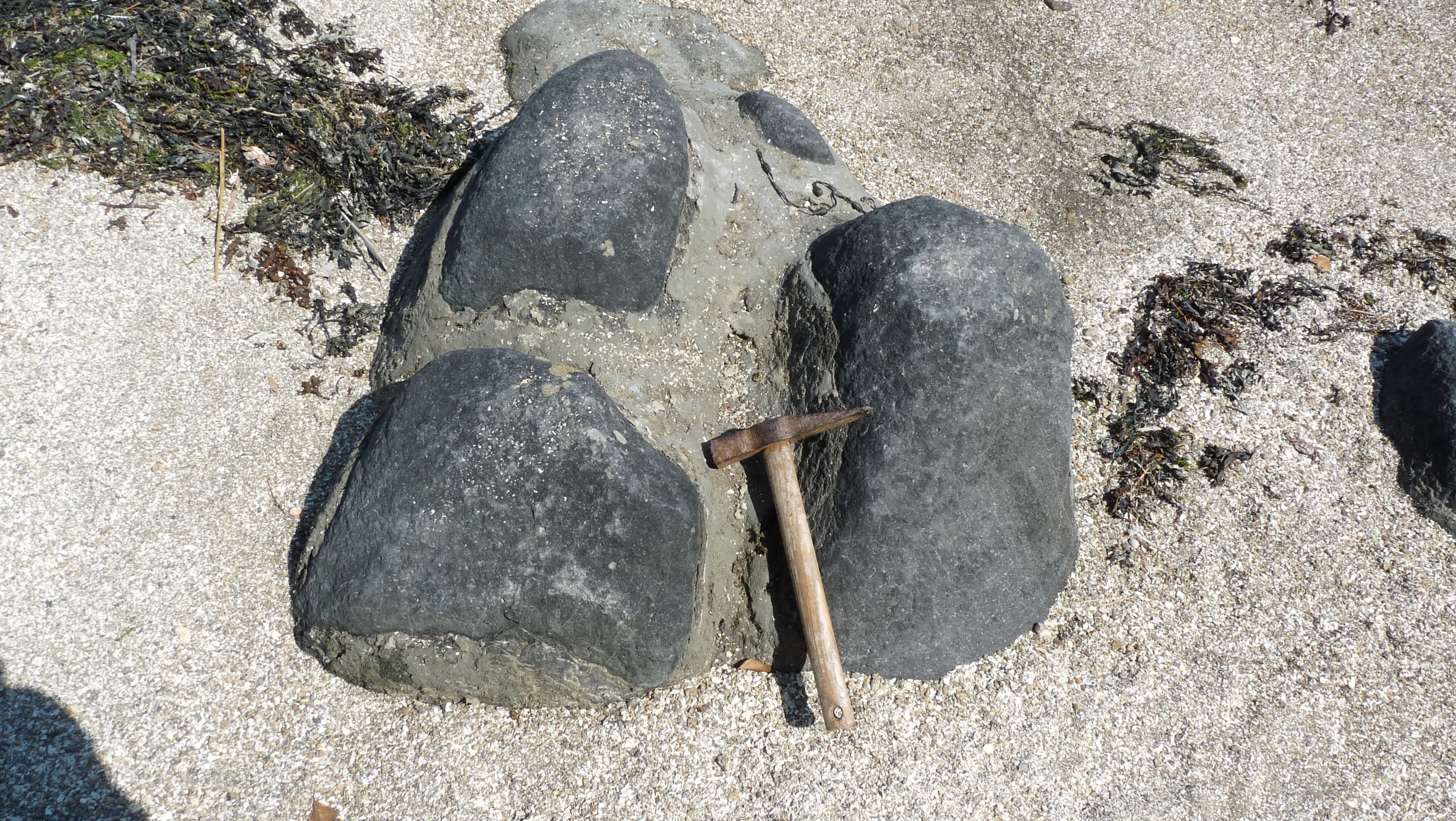
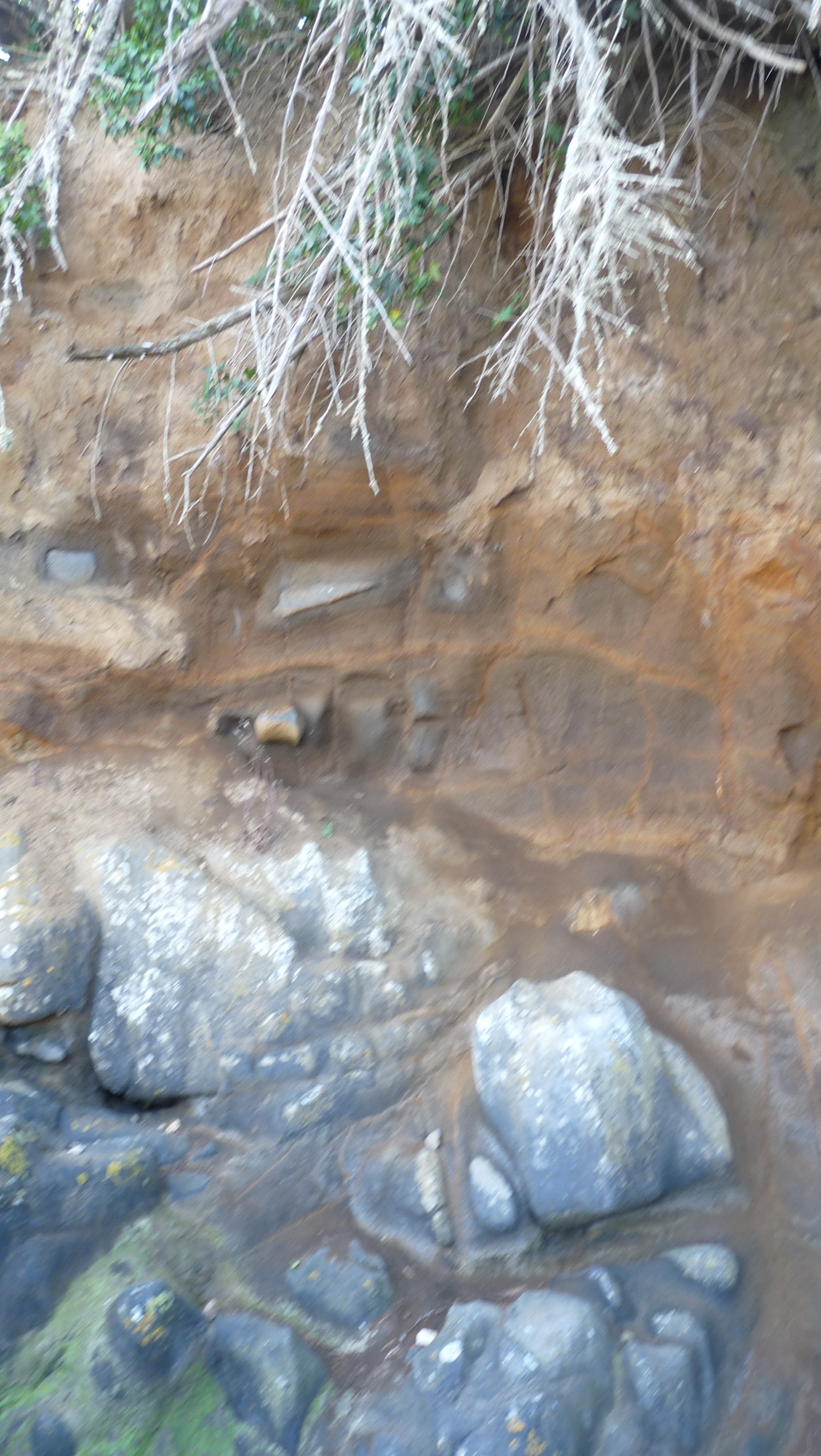
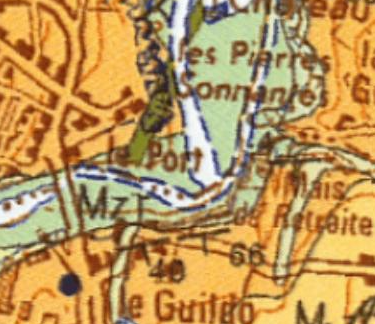
Quelques sites visités pendant une semaine de vacances, partie Ouest de la baie de St Malo. Le site des pierres sonnantes du Guildo. Ca n'est pas souvent qu'un site d'intérêt géologique figure sur les cartes IGN. Le site doit son nom à des amas de gros blocs arrondis d'une roche qui donne un son disons métallique quand on les frappe. Il se trouve en rive gauche de l'Arguenon en face du château du Guildo. L'accès se fait depuis le port. Au début de la marche, on voit ceci. Plutôt mouvementé. Dans le coin, c'est du métamorphique. Vue de quelques échantillons: Un coup, ça ressemble à un gneiss plutôt riche en biotite avec une foliation peu nette. Ailleurs, ça ressemble à une roche grenue avec quartz et feldspath, un peu de muscovite et quelques cristaux noirs de biotite. On est dans le domaine des migmatites. En descendant l'estuaire vers le Nord, on arrive aux pierres sonnantes: La roche n'en a pas l'air mais elle est extrêmement dure. C'est une dolérite, une roche microgrenue équivalente par sa composition à un basalte. Sur échantillon, à l'oeil nu, on arrive à distinguer de belles baguettes de fedspath plagioclase. Mais ce qui interpelle est la facilité avec laquelle la roche peut s'altérer. Le matériau résiduel est verdâtre dans lequel argiles et chlorites doivent être bien présentes. En fin d'évolution on distingue, dans la petite falaise de la rive, des fantômes de boules (désolé pour la qualité de cette photo). Cette roche pourtant si résistante sous le marteau apparaît beaucoup plus dégradée que les migmatites encaissantes. A d'autres endroits de la côte, des filons sont devenus de profondes tranchées totalement vides. Comment expliquer cette sensibilité à l'érosion? Voici l'extrait de la carte géologique où figure, en vert foncé, le filon de dolérite au sein des migmatites: Je laisse la place à d'éventuels commentaires et reviendrai avec d'autres sites.
-
Faciès calcaires du Moulin-Wibert ???
jjnom a répondu à un sujet de GORDIEI dans Roche et pétrographie
Non, mais j'y ai été étudiant. -
Faciès calcaires du Moulin-Wibert ???
jjnom a répondu à un sujet de GORDIEI dans Roche et pétrographie
Bonjour. La première photo est bien celle d'un bloc de calcaire du Moulin Wibert. calcaire gris, dur, avec nombreuses sections de bivalves (trigonies, gervilles, ...) Pour la photo de la falaise: au tout premier plan, les blocs arrondis appartiennent à la formation du Grès de Chatillon (ou Grès d'Audresselles), qui sont surmontés (reste de la falaise) par les argiles de Chatillon. -
Fossil terril belge
jjnom a répondu à un sujet de Dude_beach dans Demandes d' identification de fossiles
Cicatrices d'appendice racinaires. Voir Stigmaria. -
Fossiles de plantes - Partie 2 (Carbonifère)
jjnom a répondu à un sujet de Zulu dans Demandes d' identification de fossiles
Bonsoir. Au moins, il y a de la variété. Le 1 est un type Alethopteris (pinnules décurrentes sur l'axe). Pour tout ce qui a un port de fougère, il serait intéressant de se brancher sur un spécialiste. Ca permettrait peut-être de cerner des associations pour définir un niveau précis et peut-être une origine géographique. Bruno Vallois pourrait certainement mettre des étiquettes sur tout ça. Il passait sur ce forum jusqu'en 2017, pseudo Docdutronc. Je n'ai pas retrouvé son adresse mail. Vous devriez tenter de passer par le MHN de Grenoble à qui il a fait don de sa collection. 2 choses pas banales: le 4 est un strobus vu en coupe. Vraiment pas fréquent. Les strobus sont les organes reproducteurs (sporifères) des Sigllaria et Lepidodendron. le 11, avec son allure de Calamites est probablement un autre strobus mais vu de l'extérieur. Si vous réussissez à contacter B.V. merci de revenir ici avec les conclusions. -
Fossiles de plantes (Trias?) Partie 1
jjnom a répondu à un sujet de Zulu dans Demandes d' identification de fossiles
Bonjour. A parler Keuper et Carbonifère, je pensais qu'on serait allé du côté de la Haute-Saône. Si on parle de Besançon et sa banlieue, c'est rapide: - Keuper: il y en a seulement entre Fontain et Beurre: Marnes à gypse. - Carbonifère: aucun affleurement local. Voir la coupe sur le doc ici: https://www.shnd.fr/wp-content/uploads/2020/02/Sorties_geologiques_2014_Besancon-rolin-.pdf. La flore montrée par les échantillons récoltés est pourtant bien typique du Carbonifère: Sigillaria, Pecopteris, Neuropteris, ... comme l'indiquait Trias 07. Je ne vois que la possibilité d'un dépôt (ancien) effectué par l'homme pour expliquer la présence de ces blocs près de Besançon. Savoir de où ils proviennent et comment ils sont arrivés là, c'est une autre histoire. -
Fossiles de plantes (Trias?) Partie 1
jjnom a répondu à un sujet de Zulu dans Demandes d' identification de fossiles
Même avis Je me demande bien si ce n'est pas là un dépôt artificiel. Les cartes géol ne sont pas toujours aussi exactes qu'on le souhaiterait mais entre alluvions modernes et Keuper, ça ne doit pas être trop difficile de faire la différence. Si on avait le nom de la commune, on devrait pouvoir déterminer s'il y a une chance d'avoir là un affleurement que ce soit du Keuper ou du Stéphanien. https://lillonum.univ-lille.fr/files/original/e1467514c192f6ddd89085a94ef4736b44927db7.pdf -
Bonjour. A la pèche aux infos récentes: Premier texte (1) The lowest phyllite/mica schist nappes, Lower Finse, Synnfjell represent the Cambro Ordovician sediment cover of the Baltic margin. (2) The overlying nappe Madla, Storheia, Dyrskard, Hallingskarvet consist of felsic metaigneous rocks with a consistent age between c.1525 and 1493 Ma. They host c.1040 Ma intrusives and c.1025 Ma Sveconorwegian metamorphism. They likely represent transported Baltican (Sveconorwegian) basement, widely exposed in S Norway. (3) The overlying nappes ;Sola, Boknafjord, Kvitenut, Revseggi are more diverse and lack counterparts in the exposed Baltican crust. The Sola nappe, near Stavanger, comprises a marine succession Kolnes succession of mica schist, metasandstone, marble, amphibolite and felsic metavolcanic rocks. The metavolcanic rocks metadacite rhyolite are fine-grained mica gneisses, with calc-alkaline composition. Their extrusion age of c.941 934 Ma date deposition of the sequence. Detrital zircons in a metasandstone sample (n=138) yield main age modes at c.1040, 1150 and 1395 Ma, as well as significant Paleoproterozoic and Archaean modes. Autre texte: In Stavanger, the lowermost phyllite nappe -Buadalen nappe- is overlain by the Madla and Sola nappes (former Jæren Nappe). The Madla nappe comprises c. 1510-1495 Ma orthogneiss with Sveconorwegian metamorphism (c. 1025 Ma). The overlying Sola nappe comprises a sequence of mica schist, metasandstone, marble, amphibolite and felsic metavolcanic rocks. La nappe Jaeren aurait donc été subdivisée en 2: Madla, qui nous concerne, constituée principalement d'orthogneiss et la + ancienne et Sola, nettement moins vieille, avec une composition beaucoup plus variée. Les articles trouvés concordent avec la carte géol: orthogneiss mais le protolithe n'est jamais désigné clairement. Et nulle part le moindre silicate d'Al métamorphique n'est mentionné.
-
Bonsoir. En fait, le "granite à tonalite ..." n'est que l'en-tête d'un groupe (21) qui comprend des granitoïdes allant de tonalite à granite avec hornblende et biotite. Et dans le groupe 21, il y a le 102 qui correspond à granite. Je suppose que les deux dénominations se combinent et qu'il faut comprendre granite à hornblende et biotite. Même logique pour les anatexites: les migmatites locales 440 font partie du groupe 22. Ailleurs, on pourrait avoir des migmatites 440 du groupe 33. Pas trouvé la liste des item 1 à 99.
-
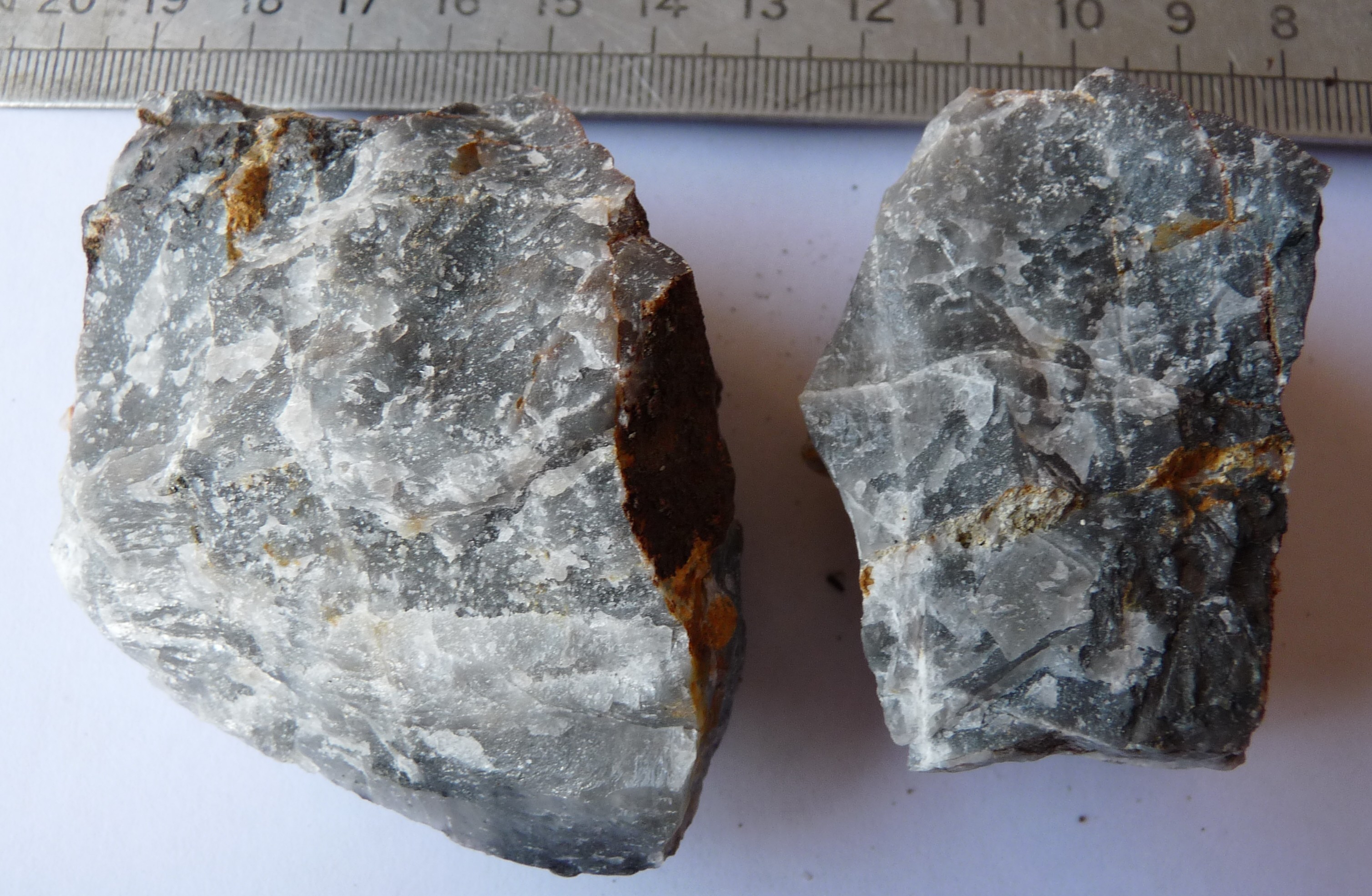
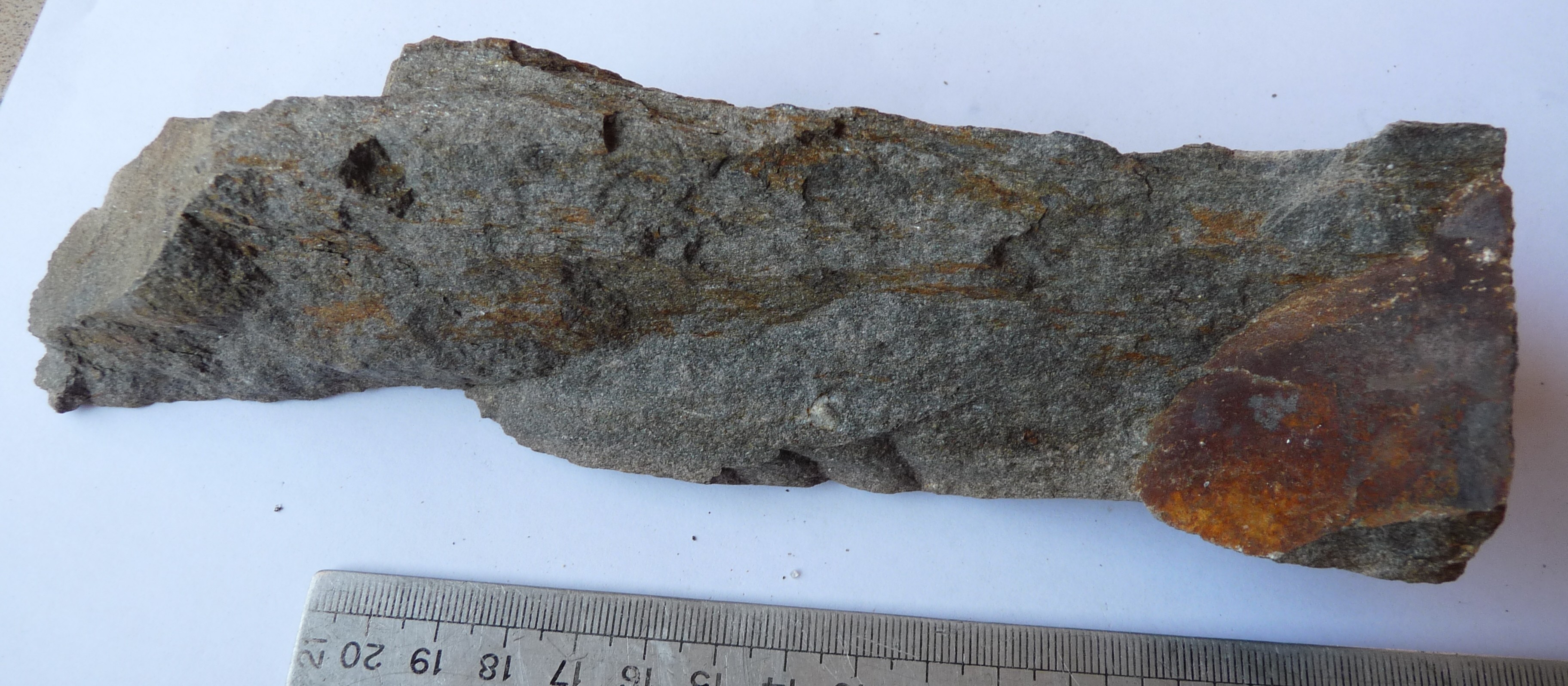
C'est vrai. Pour être honnête, j'ai quelques difficultés pour associer indiscutablement "the"caillou avec les premières photos du sujet. Le fond sombre de l'affleurement fait penser à une diorite. Pas de quartz bleuté apparent. Les bandes blanches montrent ce qui semble être une association plagios et quartz (sic) bleutés avec parfois un gros feldspath peut-être potassique. Dans l'échantillon, je verrais bien quartz-hornblende-grenat. Hbl et Grt ça va bien ensemble mais sans Pl, c'est moins bon. Et Qtz sans Pl ça fait tâche par rapport aux photos d'affleurement. Rendez nous les Plagios !!! Tu pense à ça, peut-être?: https://www.mindat.org/loc-249834.html
-
Le lien: https://geo.ngu.no/kart/berggrunn_mobil/?lang=eng Le rouge correspond à granite/tonalite avec hornblende et biotite. Ceci dit, les photos en plan large correspondent bien à des migmatites (idem Trenen 23). Le caillou avec quartz et grenat a du appartenir au leucosome (bandes claires en vue large)à composition granitique. Les parties sombres représentent le mélanosome.
-
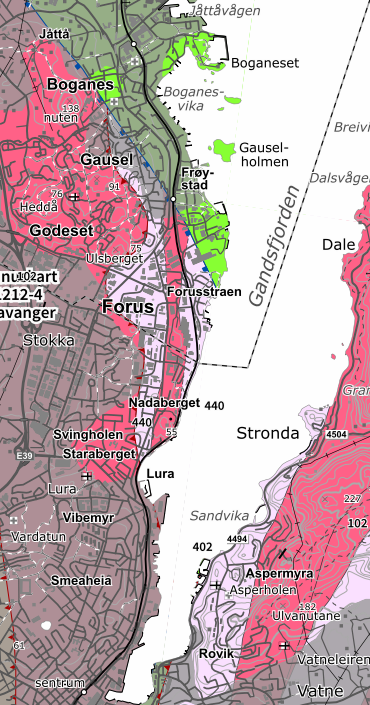
Bonjour. D'abord un extrait de carte géol: D'après la situation indiquée précédemment et au vu des photos de migmatites, les prises de vue doivent concerner les parties en rose vers Forus: "Orthogneiss migmatitique, avec inclusions de gneiss à biotite migmatitique et d'amphibolite, localement avec orthopyroxène." Orogène calédonien. L'article indiqué par Bjorn, ne mentionne la cordiérite qu'à 2 endroits dans des unités très éloignées. J'aurais donc tendance à parier sur le quartz.